Interview with Mr. Rajendra Singh

I interviewed Mr. Rajendra Singh, one of the members of the National River Ganga Basin Authority, also known as Waterman of Rajasthan when I was visiting his NGO to get a training about ecology of Ganga. I made two interviews- one about his thoughts on why Ganga Action Plan was a complete failure and other one was about the current National River Ganga Basin Authority. I was really happy to have it done.

Rajendra Singh talking about the complete failure of Ganga Action Plan-


2nd interview of Mr. Singh where he talks about the National River Ganga Basin Authority-

Interview with Arun Pathak

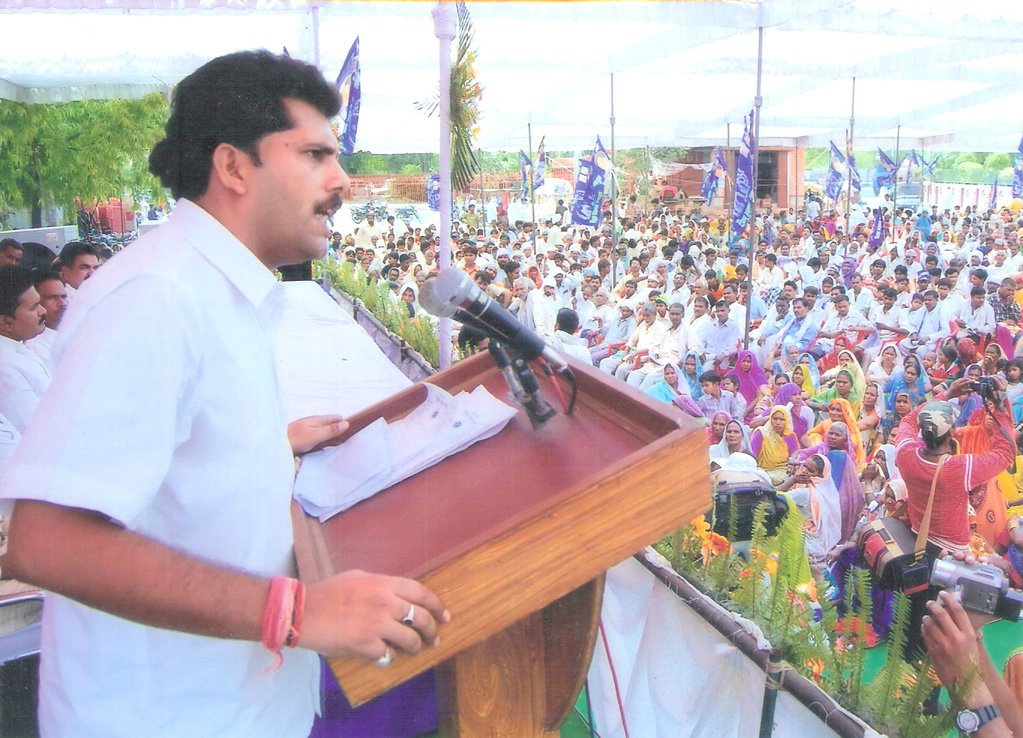
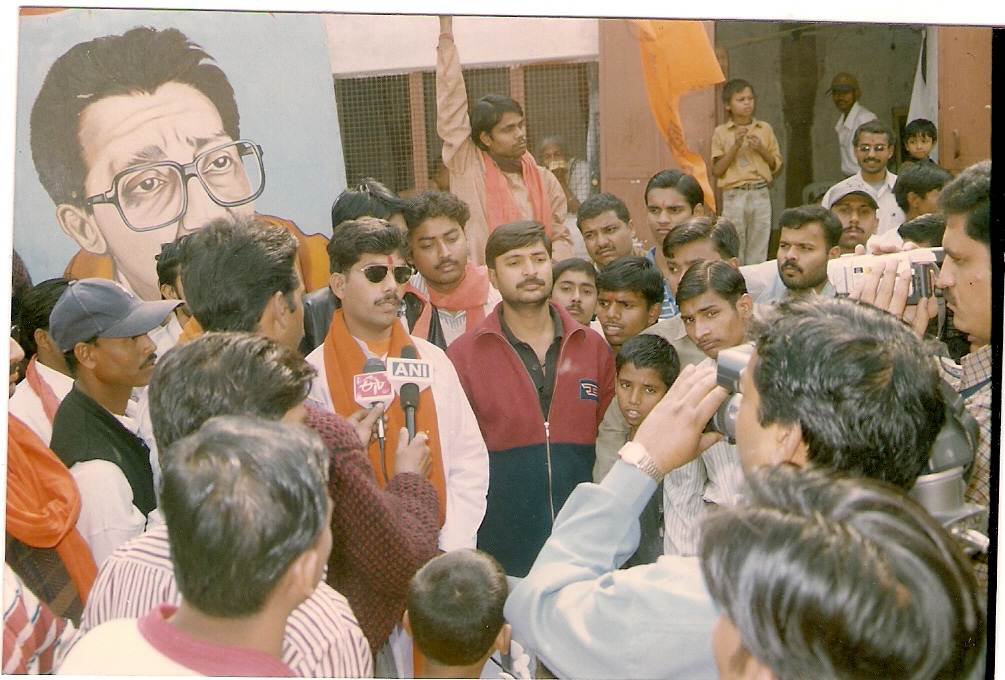
Mr. Pathak addressing a public meeting

Arun Pathakis a politician and a social worker from Varanasi. He is famous all over the world for his style of protest by committing suicide. His protest against the movie water in the year 2000 made him popular all over the world. I had been hearing about him ever since I started hearing, had seen him several times in my neighborhood and had read his name in the newspapers and magazines several times but I got to meet with him last year when I was working with Irene, a researcher from Italy. When Irene asked me to arrange a meeting with Mr. Pathak, I was not really if I would be able to arrange it because Arun Pathak has become a very powerful politician now.

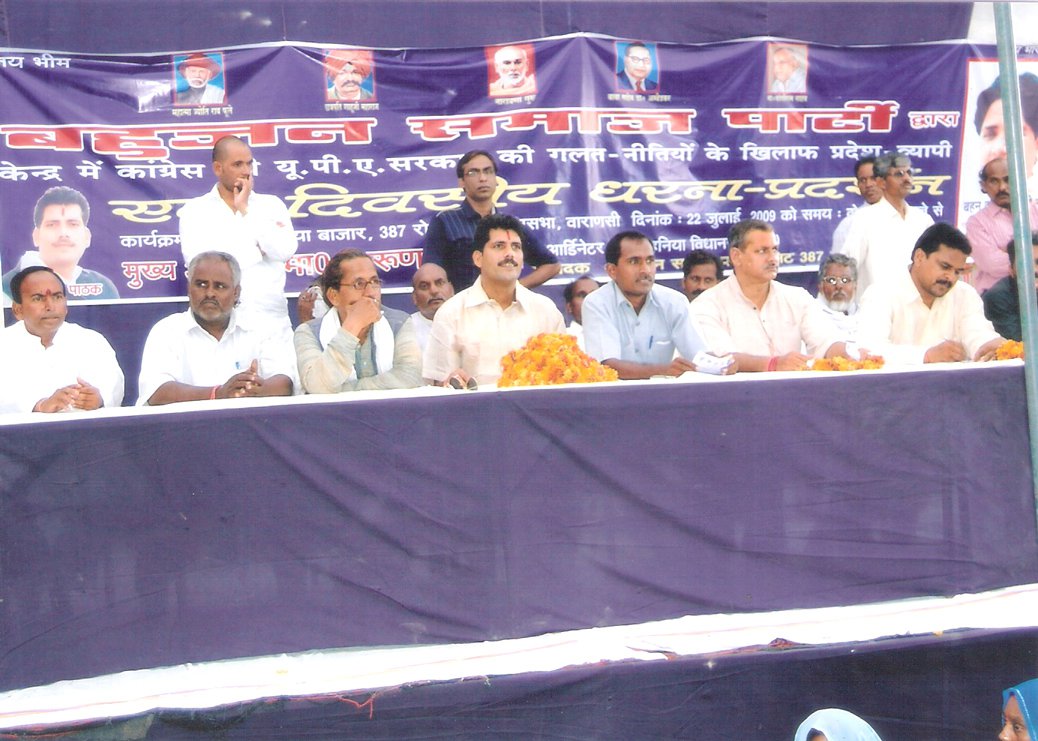
Mr. Pathak on the stage

I was thinking about Arun Pathak like any other Indian politician who do not have time for people after the elections are over but my impression about him completely wrong. I was able to arrange the meeting with Arun Pathak and I was seriously surprised to see how helping nature person he was. I went to interview him with Irene at least 20 times in 2 months and he was always so welcoming. He treated us very well and answered all of our questions. I got to learn about him a lot by interviewing him.

Mr. Pathak at Roja Iftar party in Varanasi

I was seriously surprised to listen his stories about his politics, style of protest and his struggles. Mr. Pathak’s family was very poor. His father worked at Jain Dharamshala in Varanasi as a store keeper. Pathak said that often times they did not have enough money to buy both meals everyday and they slept empty stomachs several times. He had to stop his studies and he was sent to his uncle’s house in the village only because the family could not afford to send him to the school.

Mr. Pathak at a meeting

He returned to Varanasi only after a few months because his uncle also not nice to him. Finally Pathak joined municipality school (free schools but just waste of time) in Varanasi. During his schooling when he was only 14 years old, he went to a shop in his neighborhood asking for a job because he wanted to make some money to help his family. The shopkeeper laughed at him and said that he could employ a 14 year old student. Arun Pathak said that he wanted a part time job for evenings.

Mr. Pathak in 2002

After so much request by Pathak, the shopkeeper agreed to have him as a part time employee. Pathak worked at his shop for one month and when he got his first salary, which was only Rs. 30, he was so happy to share it with his family. But when he was going back to his home with his salary, a few bullies stopped him and took his money. They asked him to buy them alcohol using the same money. After drinking alcohol they all went together and beat his family. Mr. Pathak says that his family was beaten up only because they were not able to pay the rent of their apartment on time.

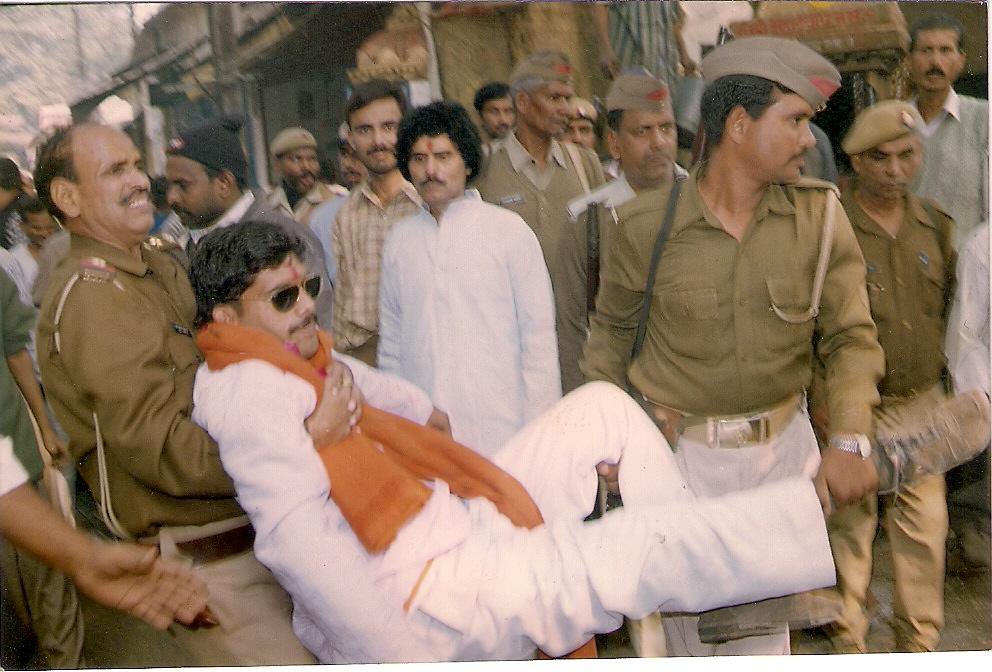
Arrest

Those days a political party called Shiv Sena was very popular in India for working with youth. Shiv Sena has always been known for being a radical Hindu party. There was a rumor those days that Shiv Sena was providing a pistol to all of their new members and after hearing this Mr. Pathak also thought to join the Shiv Sena so that he could get a pistol to kill the people who had beaten his family. Since it was only a rumor, Mr. Pathak was never provided any pistol by Shiv Sena but Mr. Pathak proudly says he found nuclear bombs instead of pistols in Shiv Sena.

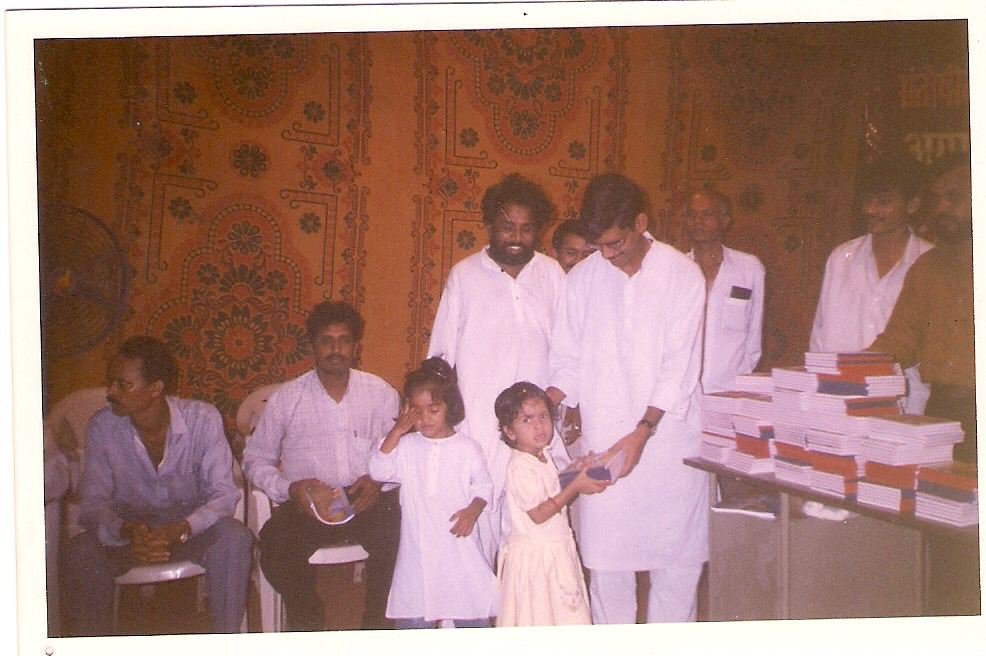
Distributing books in Mumbai

When talking about nuclear bombs he talks about the radical people of Shiv Sena. He says he had always led the life of a leader even during his school times and after joining Shiv Sena he again became popular because of leadership quality and so many people in his party became his fans who were ready to die or kill anyone for himself. He did so many programs organized under the banner of Shiv Sena and became so popular very soon. After 11 years of hard work he became district chief of Shiv Sena in the year 2000.

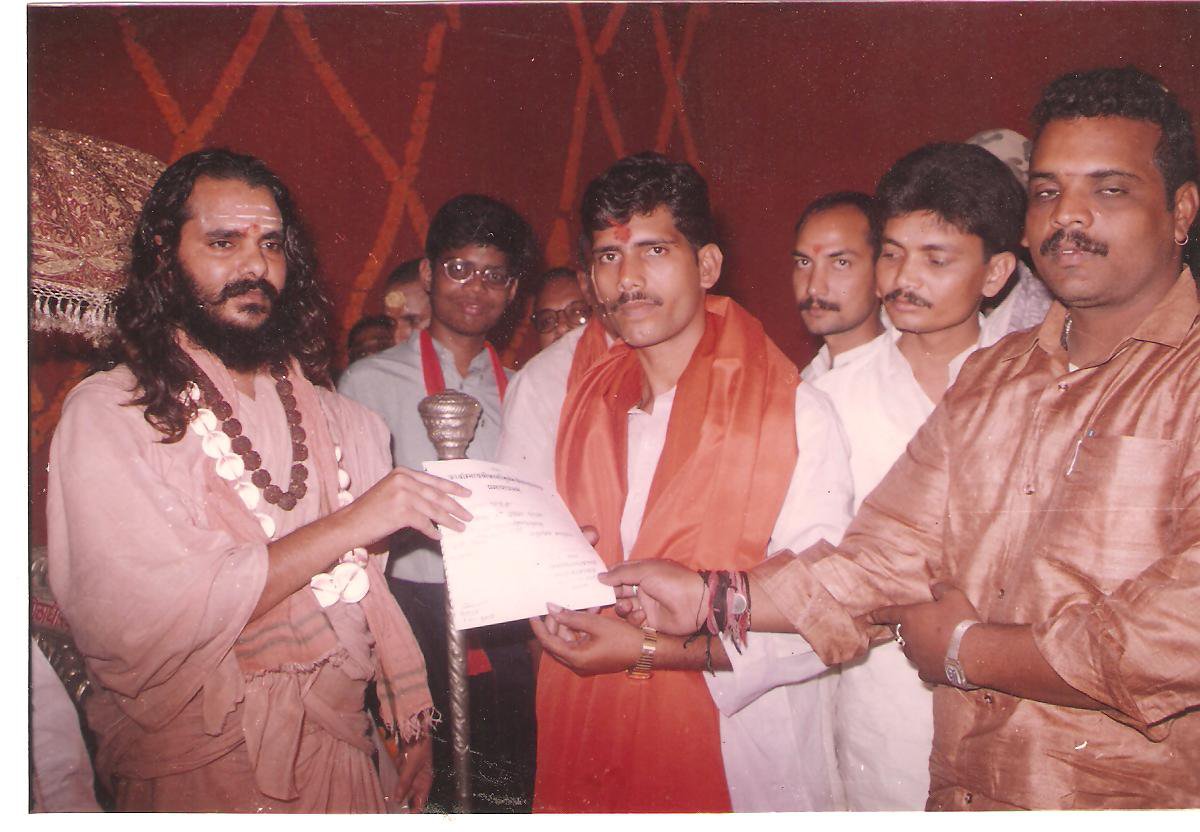
Honored by Sankaracharya

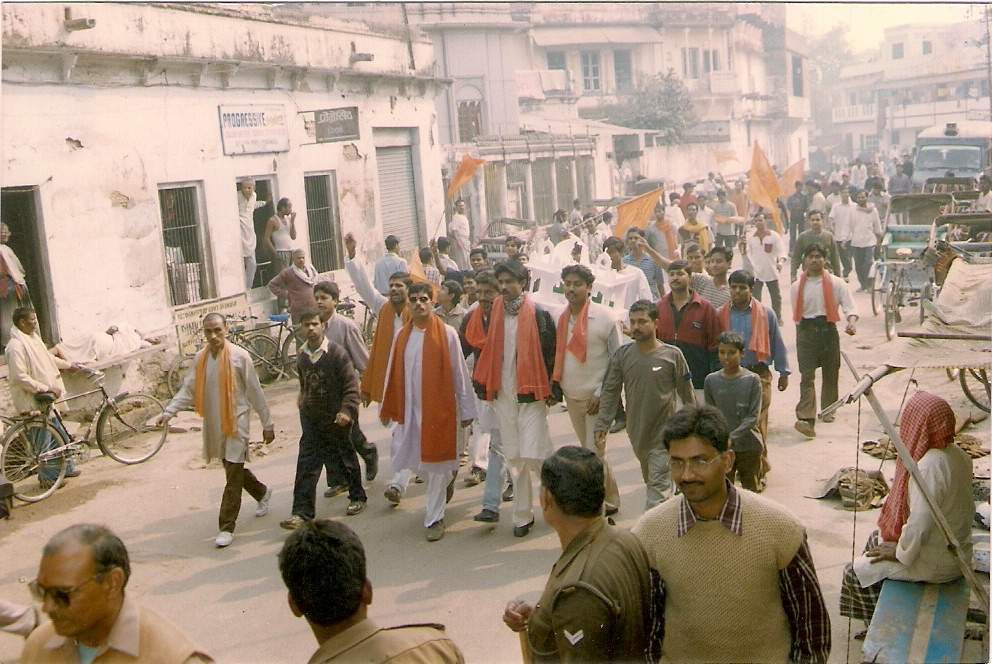
His protests were always huge and always became matter of conversation in the society. His protests against the movie Water, Girlfriend and Chori-Chori Chupke-Chupke was talked about all over the world. Shiv Sena has always been protesting against the Valentines Day celebration in India and he also organized huge protests against the festival in Varanasi. His protest against the liquor stores, corruption and several other things also got huge popularity. Very soon Mr. Pathak had became a very big name all over India.

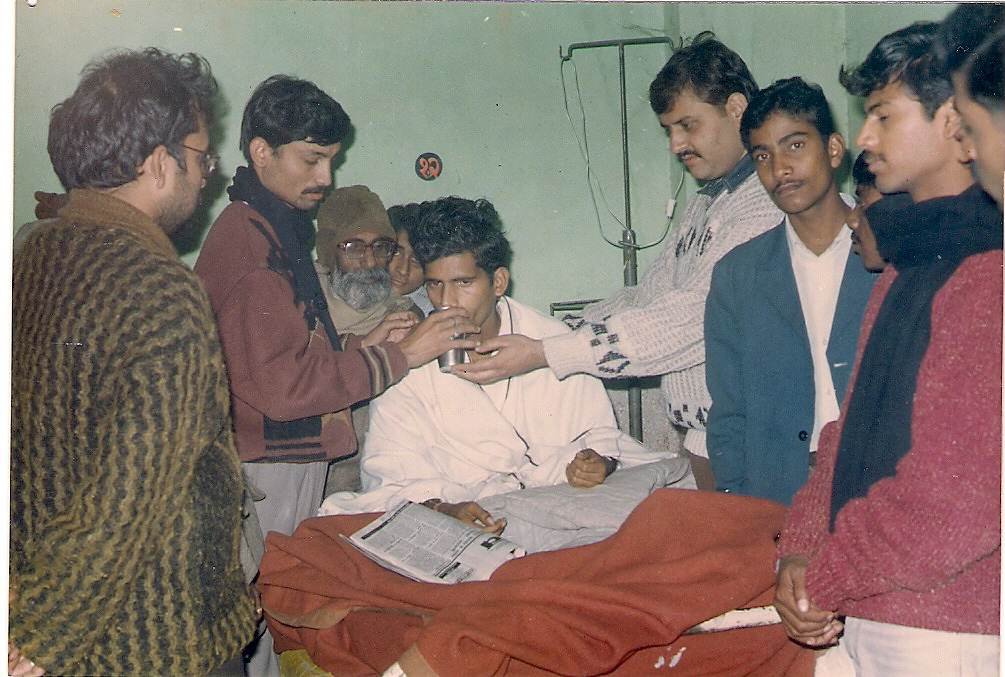
Hunger strike

Mr. Pathak has always been known for his extreme way of protesting. He has consumed poison five times in order to protest. Once he cut veins of his right hand when he stopped from entering in a temple. When I asked Mr. Pathak about why he did such things, he laughs and says that nobody listens to the poor people. If you are poor and powerless then this is what you do to make people listen to you. He proudly says that he is the inventor of staging suicide as a form of protest.

Attack

I had read so many articles about him and some of them said that the thing Mr. Pathak consumed was not basically poison and when I asked Mr. Pathak about it he showed me his palm which sweats all the time and he says that his body developed this problem ever since he consumed poison first time.  He showed me his medical prescription which says that he can not eat any heavy or spicy food, he has to drink filtered water and it all happened because of the affect of the poison he consumed several times.

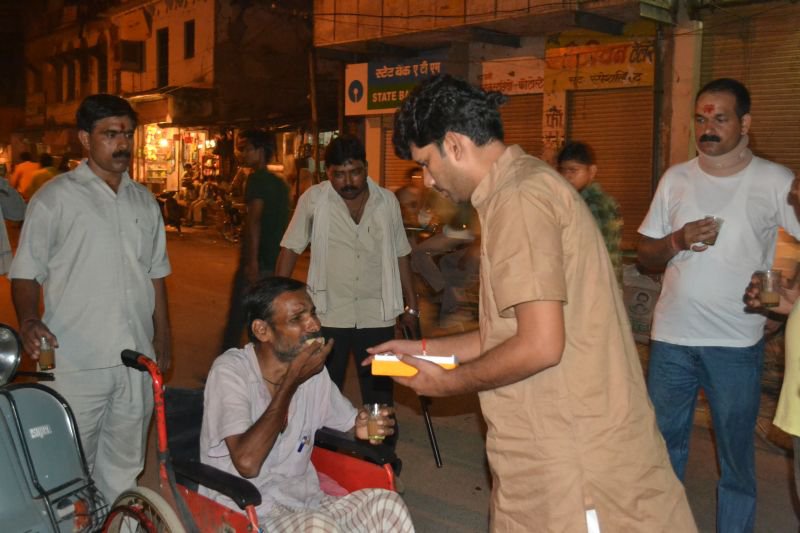
offering food to poor

He says that it was not only himself who consumed poison but there were other people as well who consumed poison or tried to burn themselves only because he asked them to do so in order to protest. After saying this he called one of his workers named Bulli. Bulli is 29 years old and had consumed poison when he was only 14. He did it in order to protest against the movie Chor-Chori Chupke-Chupke. I asked Bulli several times when I met him alone about why did he consume poison and ever time his answer was same that he did not know.

offering food to blinds

He always says that Mr. Pathak had asked him to consume poison so he did it. I asked him if he ever regret about it and says- why would I regret? It was Bhaiya’s order. He knows what is best for me. I was shocked to hear it. How come someone can have this big control over someone else? The bigger shock is people’s belief in Mr. Pathak. Anyways, he worked with Shiv Sena till 2003 and then left because he was not happy with the way Shiv Sena was discriminating against certain communities.

at a school

Actually Shiv Sena was beating the North Indians living in Maharastra and was kicking them out and Mr. Pathak was seriously hurt with the situation that he decided to leave the party. He formed his own political party and run it for four years. Finally in the year 2007 he realized that he needed a bigger platform to raise his voice and fight against big evils. Finally he joined Bahujan Samaj Party which is known for working with lower caste community and fighting against Mafias.

offering food to lepers

Again because of leadership quality he was appointed as co-coordinator for two state assembly seats in Varanasi. During his work period he made Bahujan Samaj Party very popular in Varanasi where there was no existence of Bahujan Samaj Party before. He has been kind of away from politics for the past one year and has been devoting his complete time in social service and religion. He says that he has been doing a research on the outcome of religious practices. To do it he has hired 11 priests who perform vedic yagyas everyday.

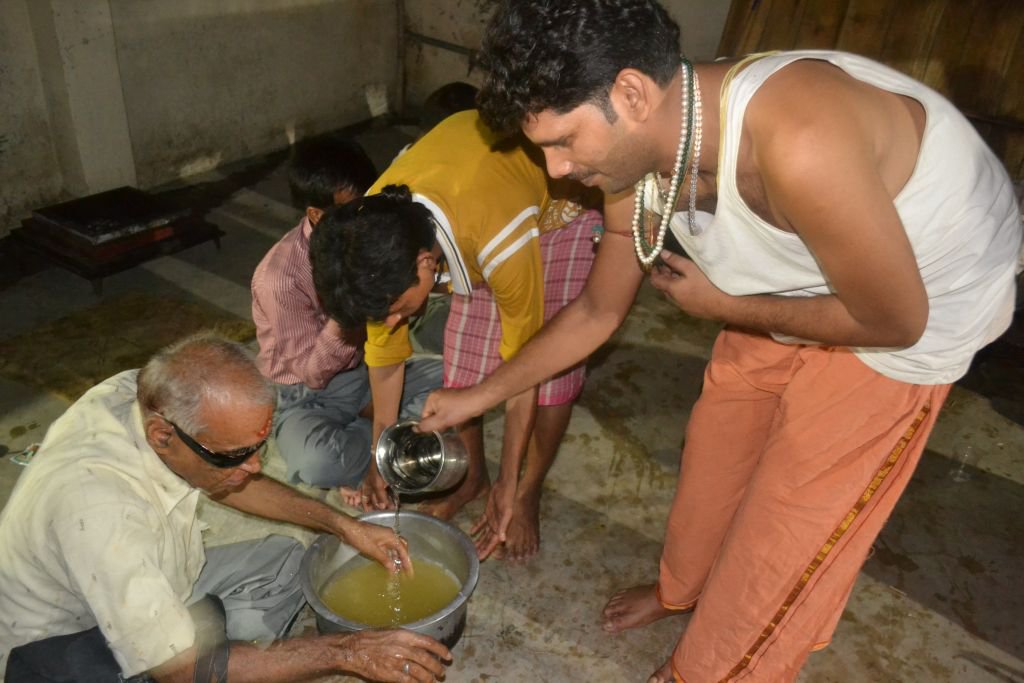
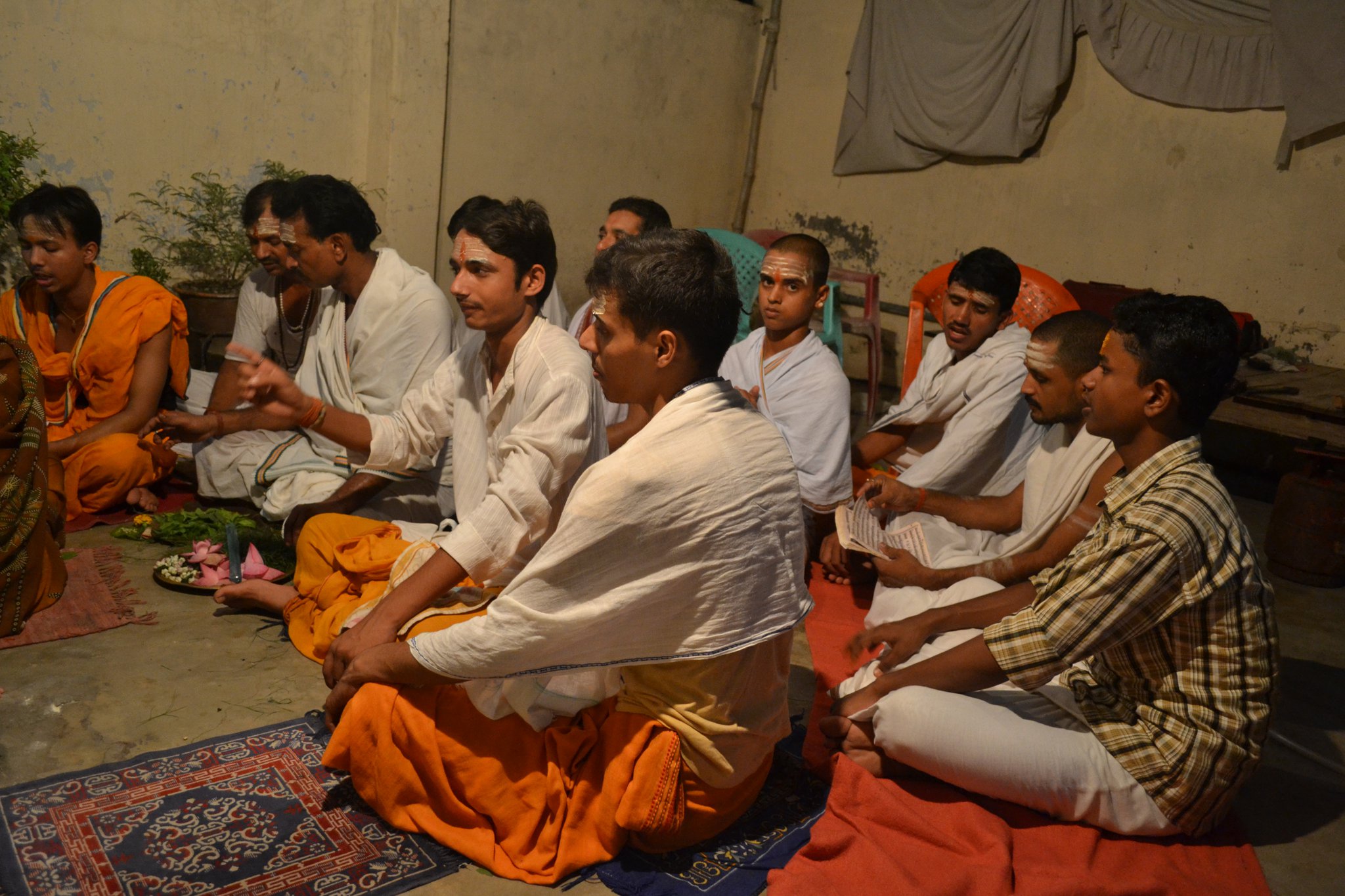
Mr. Pathak's priests

These yagayas including other rituals have been going on continuously since October 2010.  He says that he wants bring the truth in the society. If there is no outcome of such practices then people should not waste their time and if performing rituals really work then they should do it in right way. He believes that rituals do not really seem helpful nowadays because they were made thousands of years ago and now when the time has changed they also need to changed. And he wants to know this change.

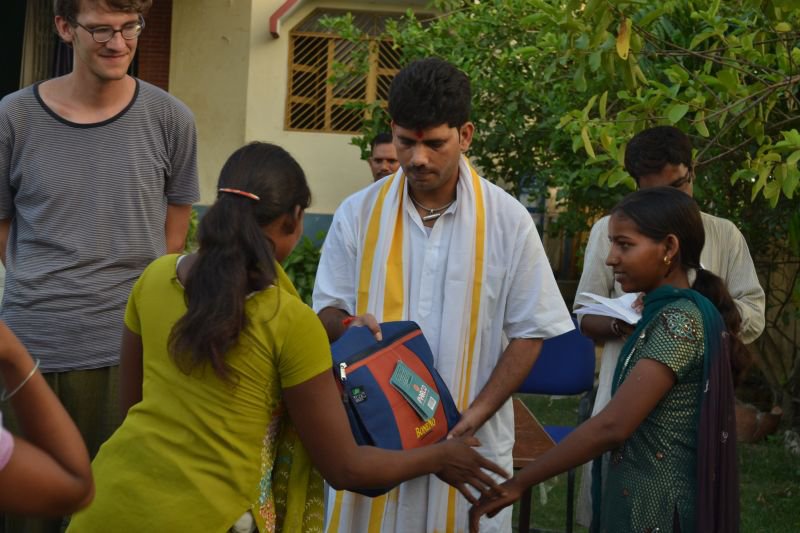
distributing books to poor students

I have been to Mr. Pathak’s place several times and every time I go there I see people coming to him asking for help. He makes some kind of donation almost everyday. I have seen him offering food to the lepers, blind or physically challenged people. I have seen him paying poor students fee or buying them books. I have seen him paying for poor people weddings. I think he does all kind of donation possible. He never any new cloth until he donates the same to a few poor people. I still remember that once he bought 12 tracksuits. 11 were donated to the beggars on the street first and only then he wore one.

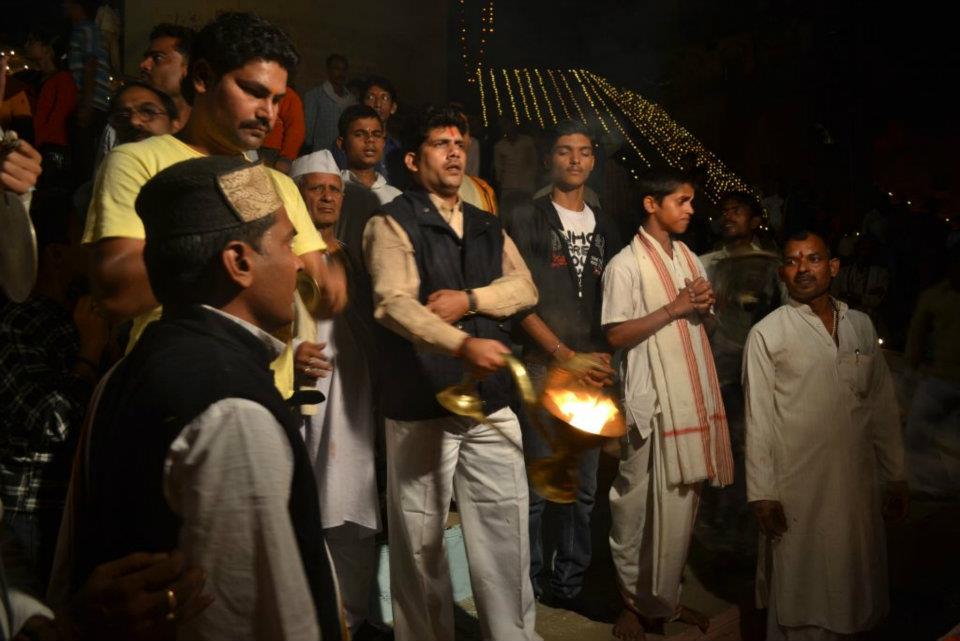
performing aarti at Assi ghat

I have seen people running behind him, I am sure he thousands of fans only in Varanasi. He is like a star in Varanasi who is always surrounded by minimum of 6 security guards. He says that there is threat of life for him because there are so many people who do not like his popularity hence he needs security guards all the time with himself. After saying this he stops for a while and then said that can you imagine that I started working at the age of 14 because of my poor family background. He proudly says that his first salary was only Rs. 30 and now he has to spend good amount of money only on his security.

Mr. Pathak with his security guards

It is definitely a huge change for anyone and Mr. Pathak definitely deserves it. Now I have met Mr. Pathak several times and I like him a lot. I love his style of working, his devotion for his work, his understanding of the society and his super helpful nature. I am sure that I have also become his fan and would love to see him progressing in his life because I personally believe that he is a thousand time better leader and politician than anyone I have ever met. My society definitely needs people like him.

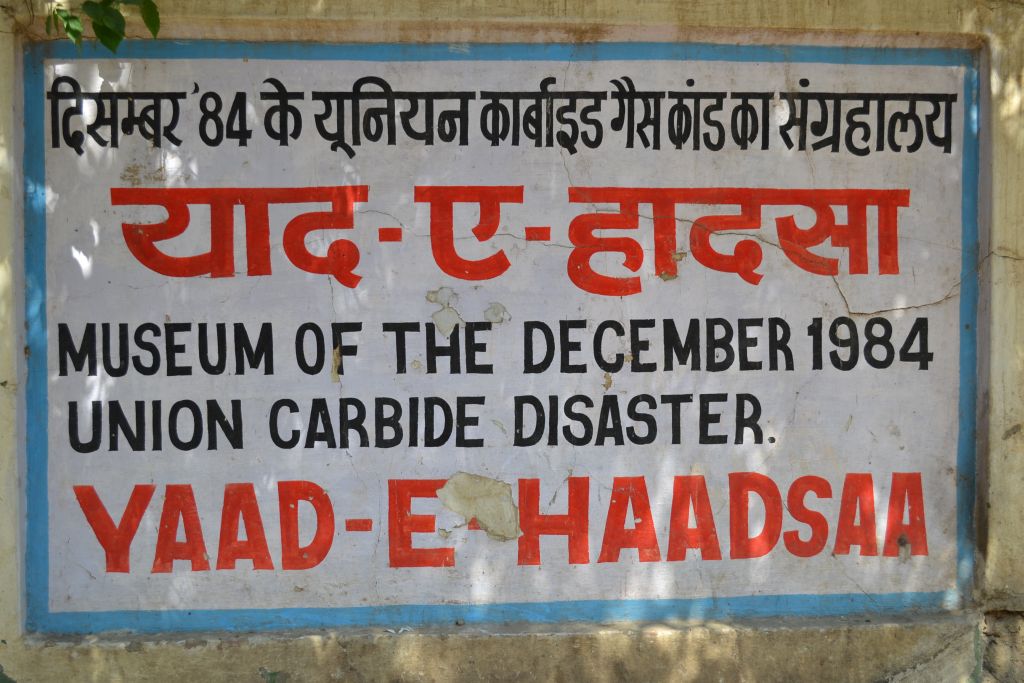
Union Carbide Gas Disaster, Bhopal

union carbide gas disaster

I went to Bhopal a few days ago with my friend to visit the city and the NGOs working on Bhopal gas disaster that took place in 1984. I had no idea about NGOs working on this issue so I called my friend Nandlal Master from Lok Samiti, Varanasi to see if he knew someone and he named me an NGO called Chingari Trust.  Nandlal Master is a social activist from Varanasi and he knew about Chingari Trust because Chingari Trust gives award to the women working against bad corporations and they had chosen 5 women from Nandlal Master’s NGO in Varanasi. I was sure that there would be other NGOs working on this issue but after reaching there I learnt that Chingari was the only NGO in all of Bhopal working continuously on this issue.

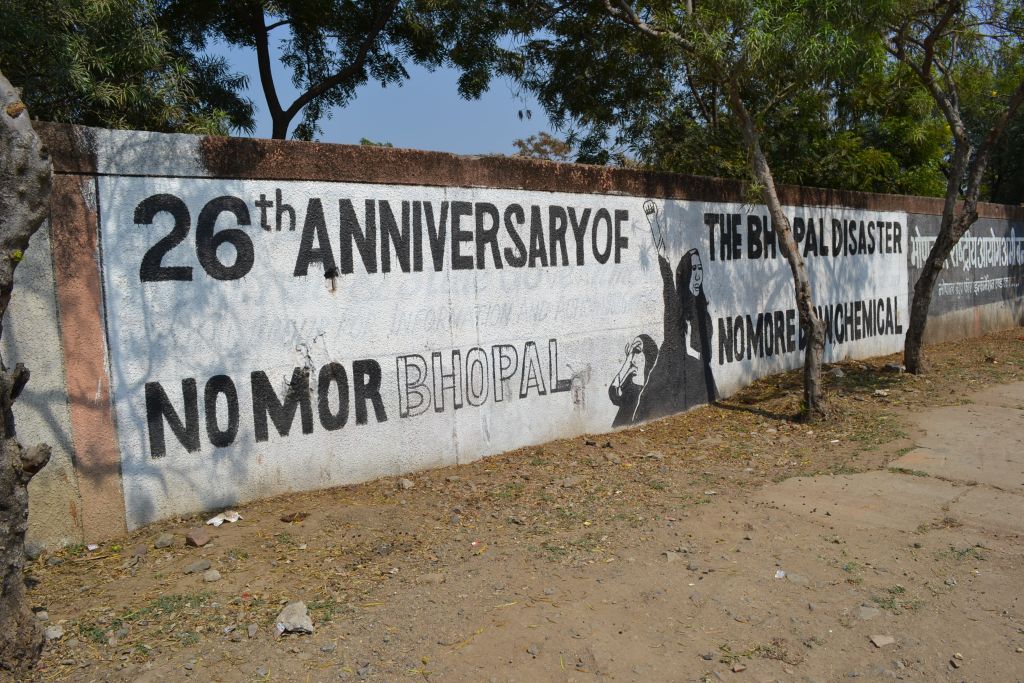
wall paintings around factory are

I was really surprised to see that no other NGO was helping the people affected by that disaster. Anyways, I called the NGO and they seemed so helpful and invited me to visit their office and working site. Their office was very close to the affected area. By mistake we reached their rehabilitation center instead of their office and to be honest I was hoping to see an office with a few people working there and was not expecting to see anyone who was personally affected but as I stepped in the office building I was shocked to see the number of affected people.

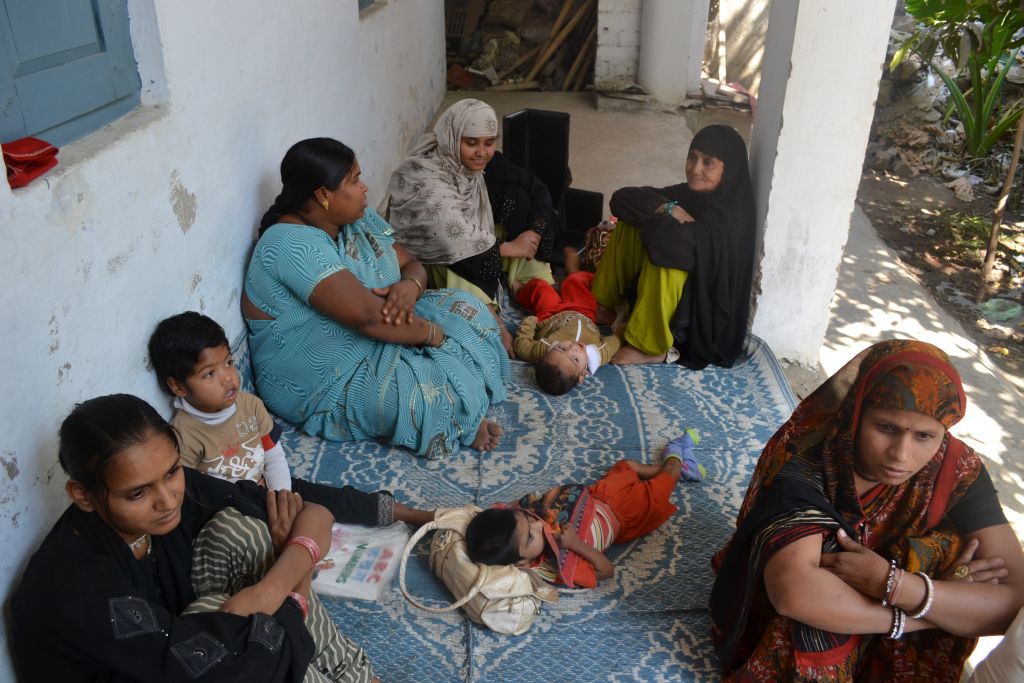
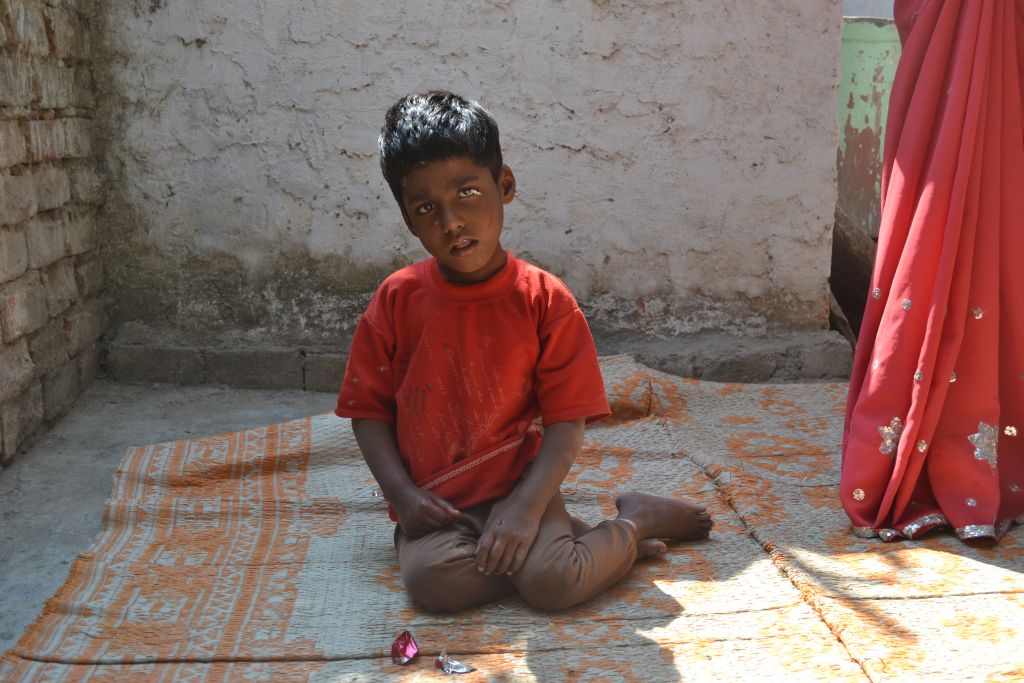
families with the affected kids

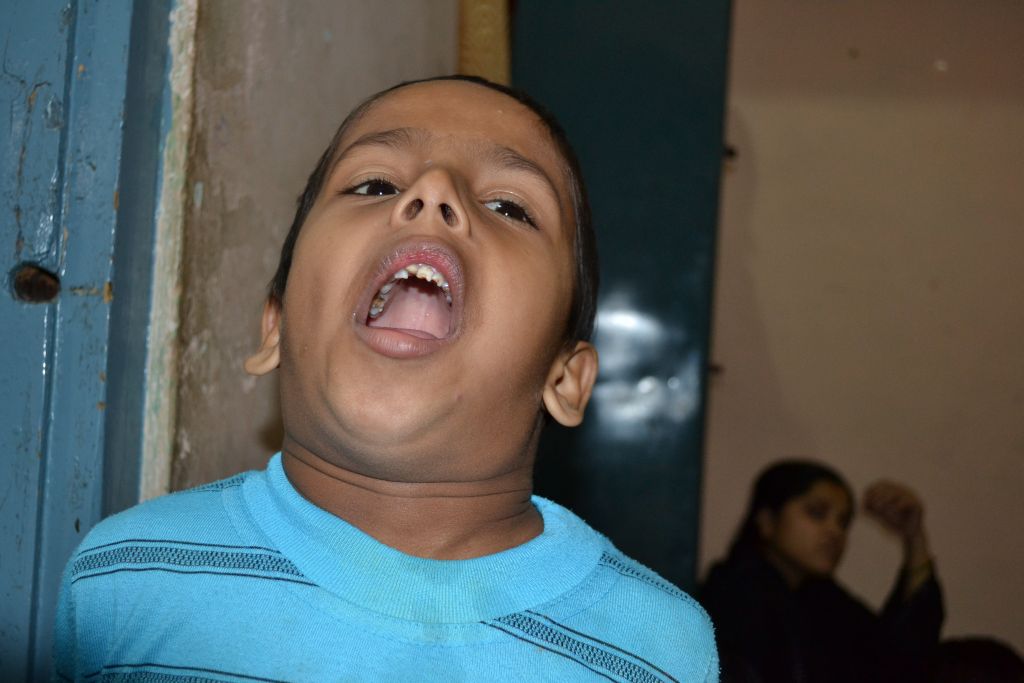
There were so many families who had brought their kids to the office because the Chingari Trust offers physical exercise classes to the affected people. I saw at least 100 kids, all aged starting from a few months to 20 years old. I just could not believe how badly they were affected. I had heard about this issue several times before and knew that the people who were present near to the affected area during the accident time were the only people who got affected and now no more new case is seen but after visiting Chingari Trust and talking with people there I came to know that still new kids are born with the diseases.

really sad

The Chingari Trust was just awesome, doing really honest business. The president of the Chingari Trust, Rashida Bee, was awarded with almost Rs. 50,00,000 in San Francisco, USA for her work with the affected people and she used the same money to form the Chingari trust and donated the rest to the Chingari trust itself. She told me that they were working on another project to open a new hospital for the affected people as the hospital they had was not enough to host all of the affected people. Now I was more shocked to hear that there were more people needing help.

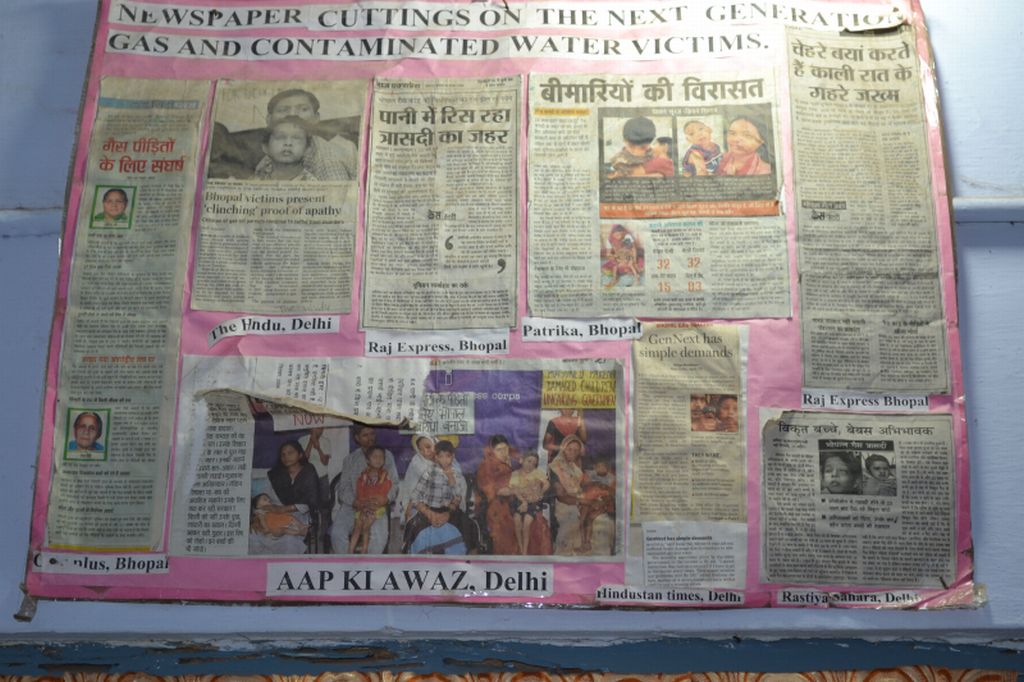
newpaper cuttings

I was talking with the IT guy of the Chingari Trust and he told me that all the ground water near the affected area is completely contaminated due to the chemicals leak after the accident and is causing huge problems to the local community. Many people living around the affected area complain about it. He gave me a tour of the affected area which was hardly 10 minutes walk from the Chingari Trust. There was another surprise waiting for me near to the affected area. Now I was surprised to see that the government has allowed people to live just across the road from the Dow Chemical factory.

he was trying to say something to me

It just seemed like any other neighborhood in India. I was talking with Lane about it and he told me that in the United States usually such factories are setup away from the city so that in case of any problem the community doesn’t get affected which made sense to me and I was wondering if our government never thought about it while giving the license to Dow Chemicals. Don’t they think that they should at least moved people away after that accident took place? So many questions. We all know that there is huge politics involved in this issue also but government should never play with the lives of thousands of innocent people. After talking with Rashida Bee and other people at the NGO my idea about the issue completely changed. Now I also believe that not only Dow Chemicals but Indian government people working with Dow Chemicals in India are also responsible for the condition and they must be punished.

Please click here to see more photos of Chingari Trust office

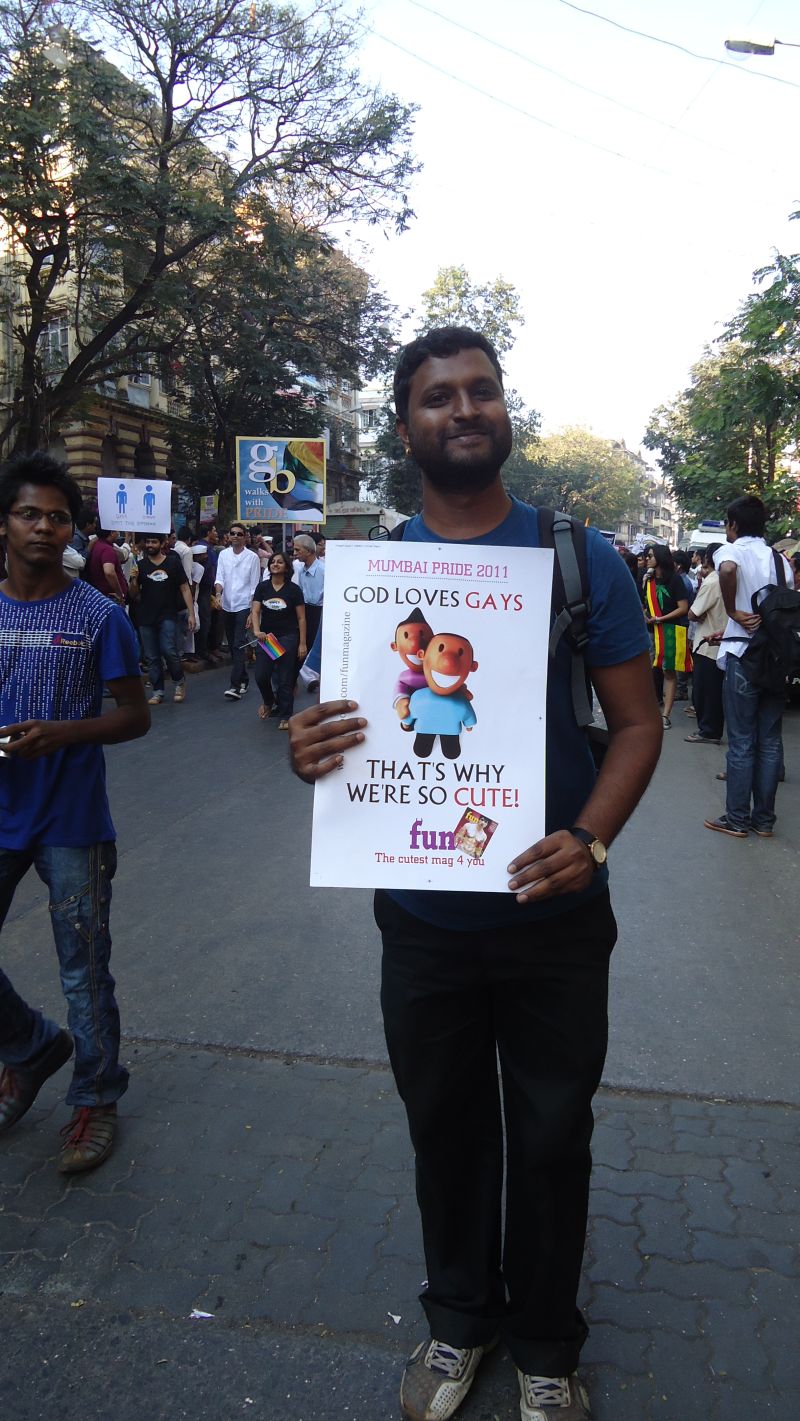
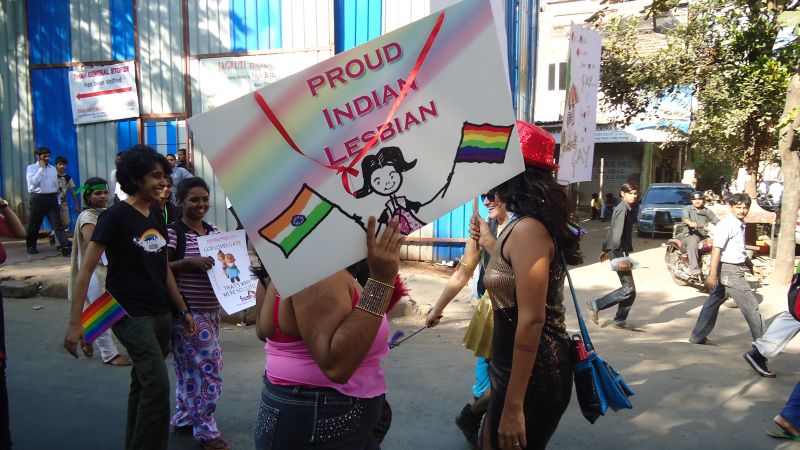
Mumbai Gay Pride 2011

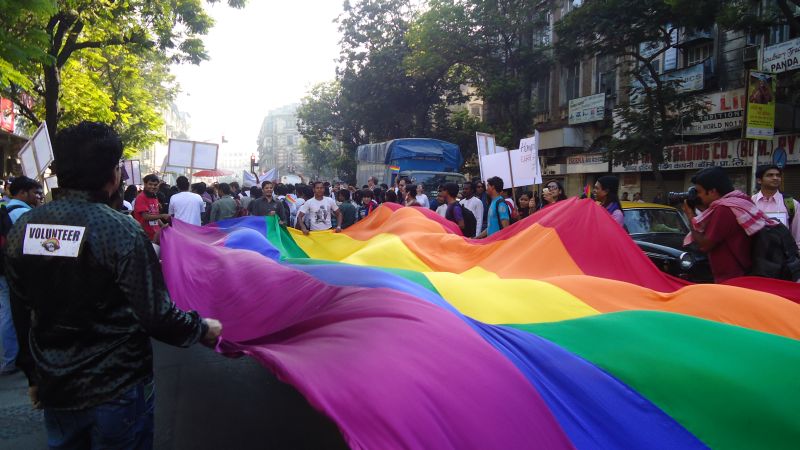
rainbow flag at the parade

Mumbai, the place of most happening Gay events in India hosted its gay pride march on 29th of January and I went to attend it. The parade was organized by Humsafar Trust which is the biggest organization working on LGBT rights in Maharastra. They used to celebrate the pride on 16th of August every year but this year date was changed because of hot weather conditions in Mumbai in the month of August. They used to celebrate pride on the 16th because they believe that India got independence on the 15th of August 1947 but the gay community in India never got independence hence they started celebrating pride on the next day of independence day.

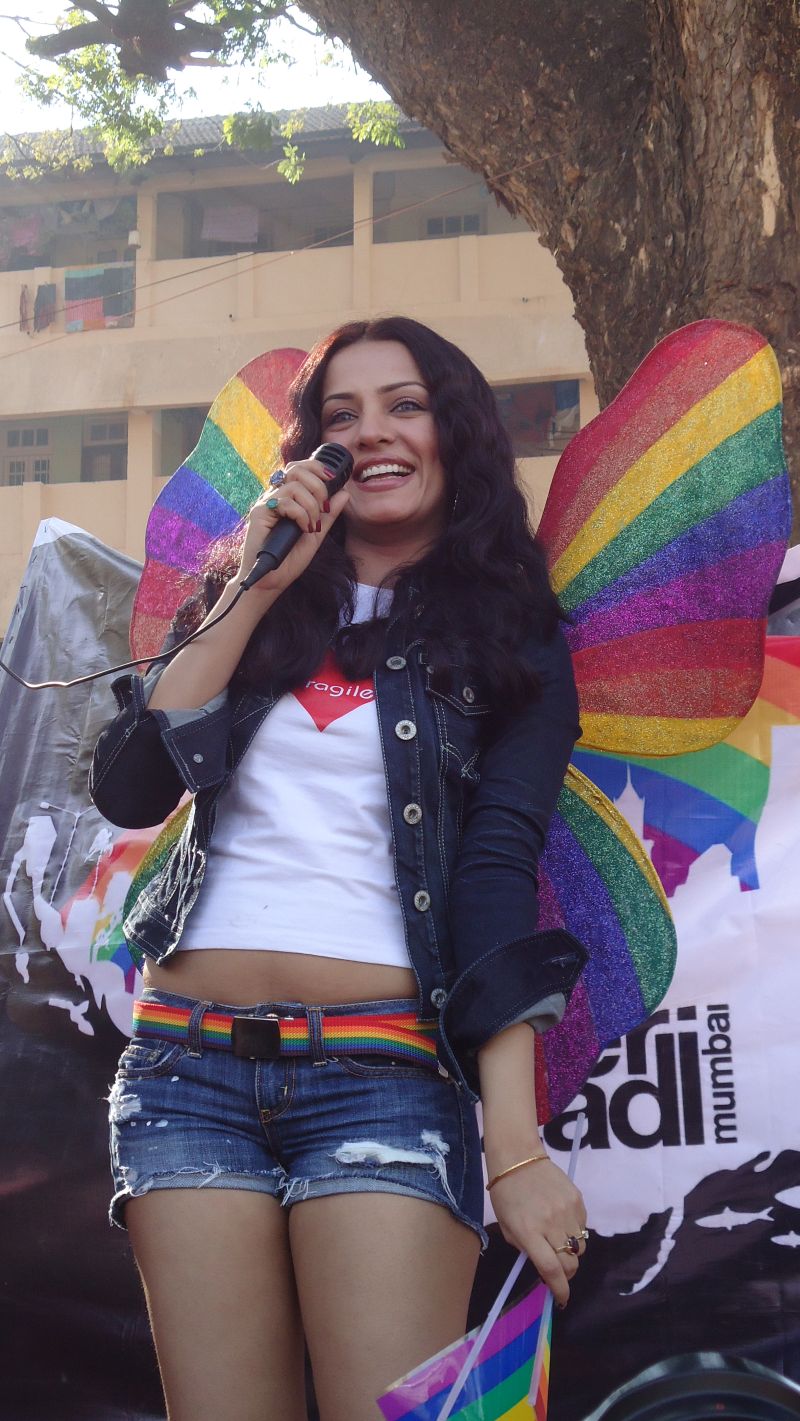
Celina Jaitely at the parade

I had already been to the Mumbai pride parade in 2009 so I also felt that it was good decision to change the date. Anyways, the parade started from the same place where it started last year- Azad Maidan and ended at Girgaum Chowpatty. It was like 5-6 Kms walk. At least a few hundred people had already gathered before I arrived at Azad Maidan and they had speeches going on. Only after a few minutes Celina Jaitely, a very famous Bollywood actress, arrived which brought extra energy amongst the participants. Celina has always been interested in LGBT issues and has been supporting the NGOs working on it. Once she admitted that her ex-boyfriend was a homosexual. She is one of the biggest names working on LGBT issues in India. I have seen her several interviews on TV and newspapers where she talks about equal rights for LGBT community.  I had seen her in 2009 parade as well. It is nice that such celebrities participate in the pride event.

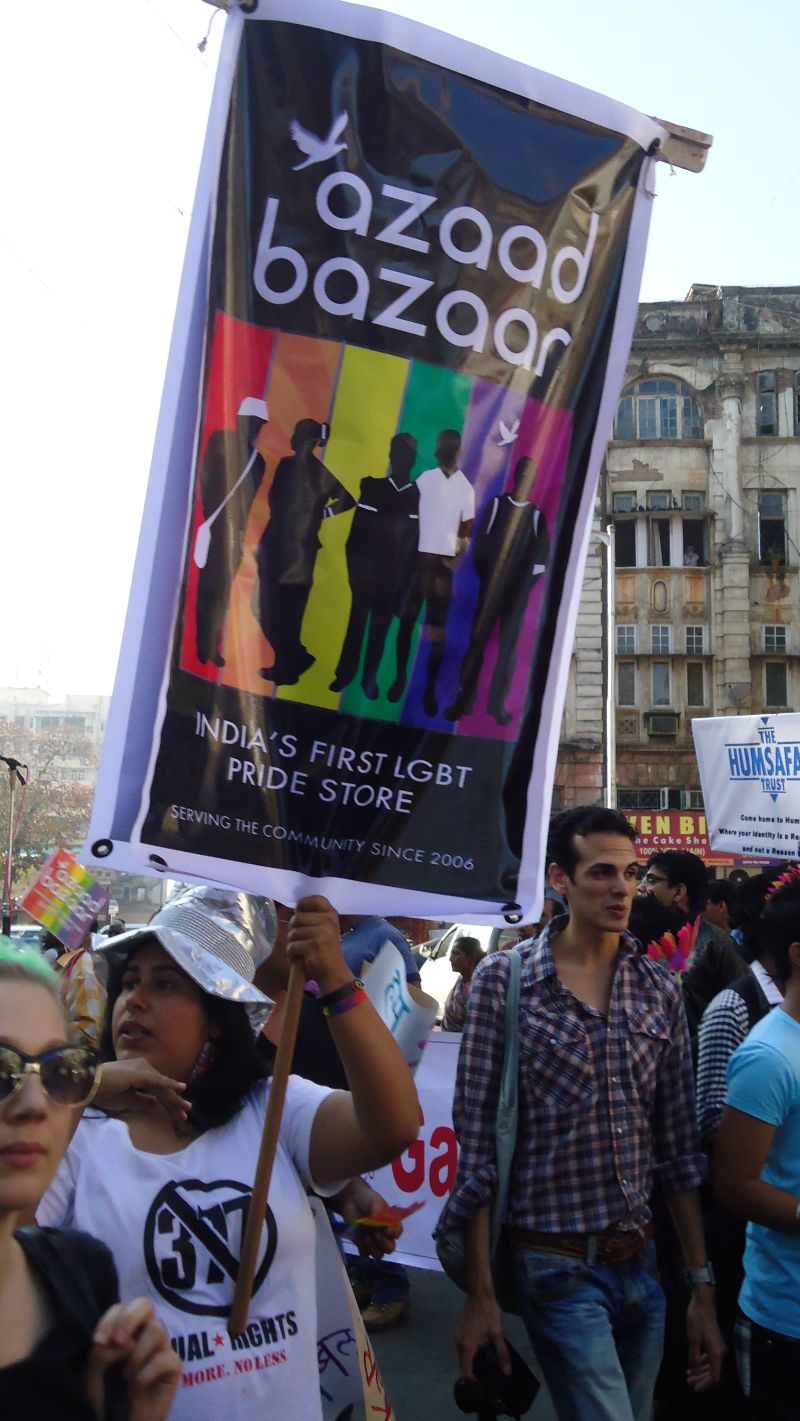
Azaad Bazaar

After a speech from Celina and other social activists the parade finally started. I saw something new this year that Humsafar Trust opened India’s first LGBT friendly store in Mumbai and they were advertising it in the parade. The shop is called Azaad Bazaar means independent store in Hindi. The liked the idea of having a special place for LGBT community because there is huge discrimination against them in India, they are made fun of. They do not feel comfortable just everywhere. And if there are such places like Azaad Bazaar then the LGBT community people could go shopping freely and meet up. In fact such places could bring change into the society because they are 365 days an year advertisement place. They are visible places and if straight community people see it then at least they would talk about it for sure and I always believe that communication can solve a lot of problems.

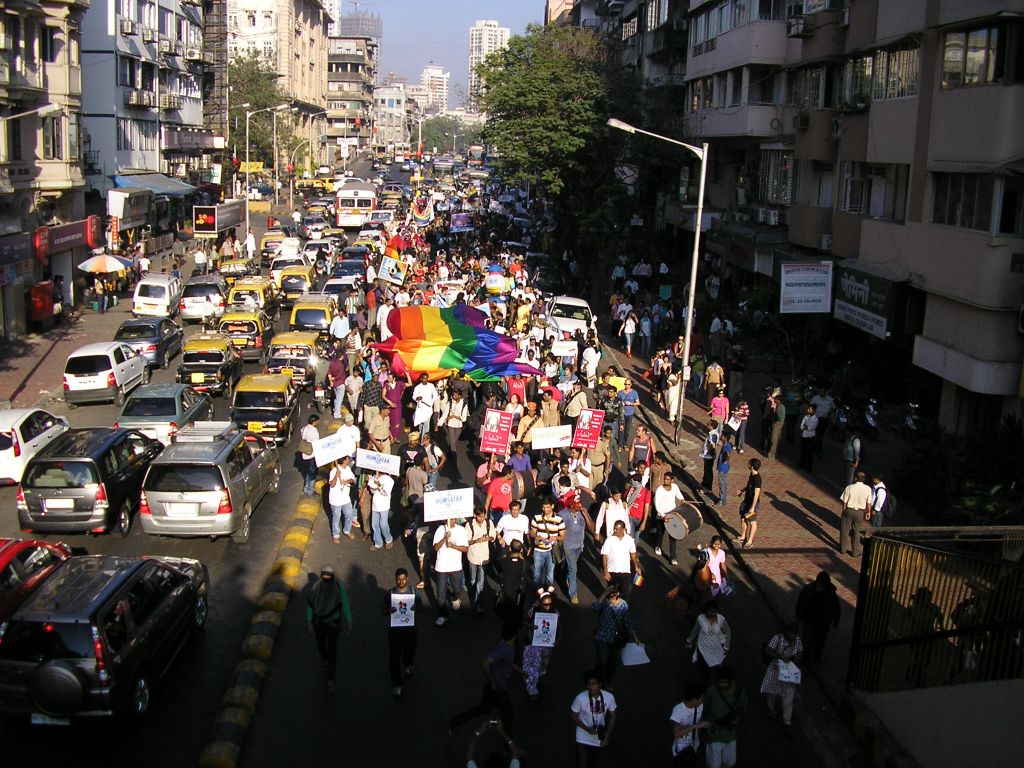
the parade

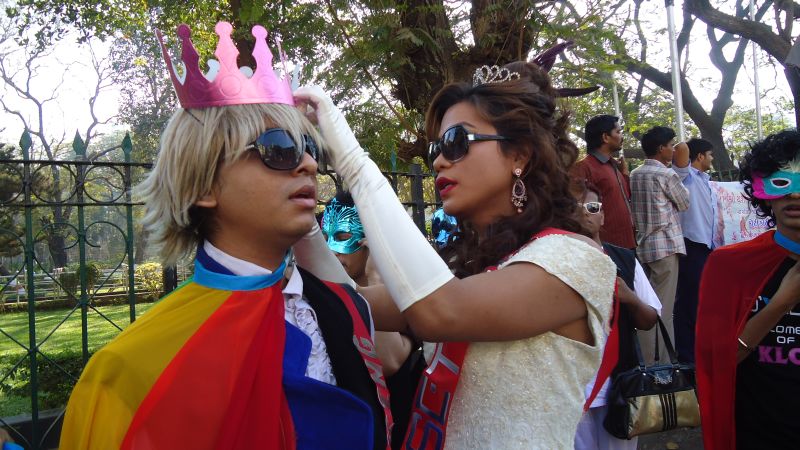
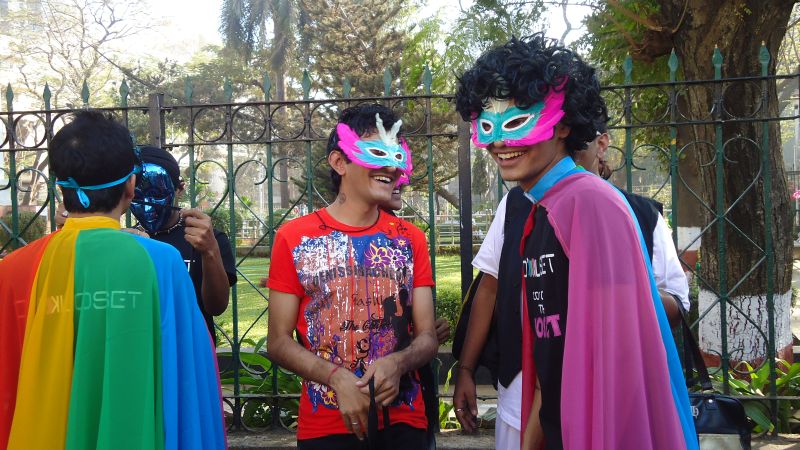
The parade started with at least 1500 people but soon it turned into a happy parade event of at least 2500-3000 people. The entire road was full of participants dancing and cheering up. There were people from many different places, even foreign countries.This year parade was also mix of tradition and modern culture. I got to see the most modern looking people in whole India and at the same time there were so many groups who had dressed very traditionally and were performing traditional dances and were singing traditional songs.

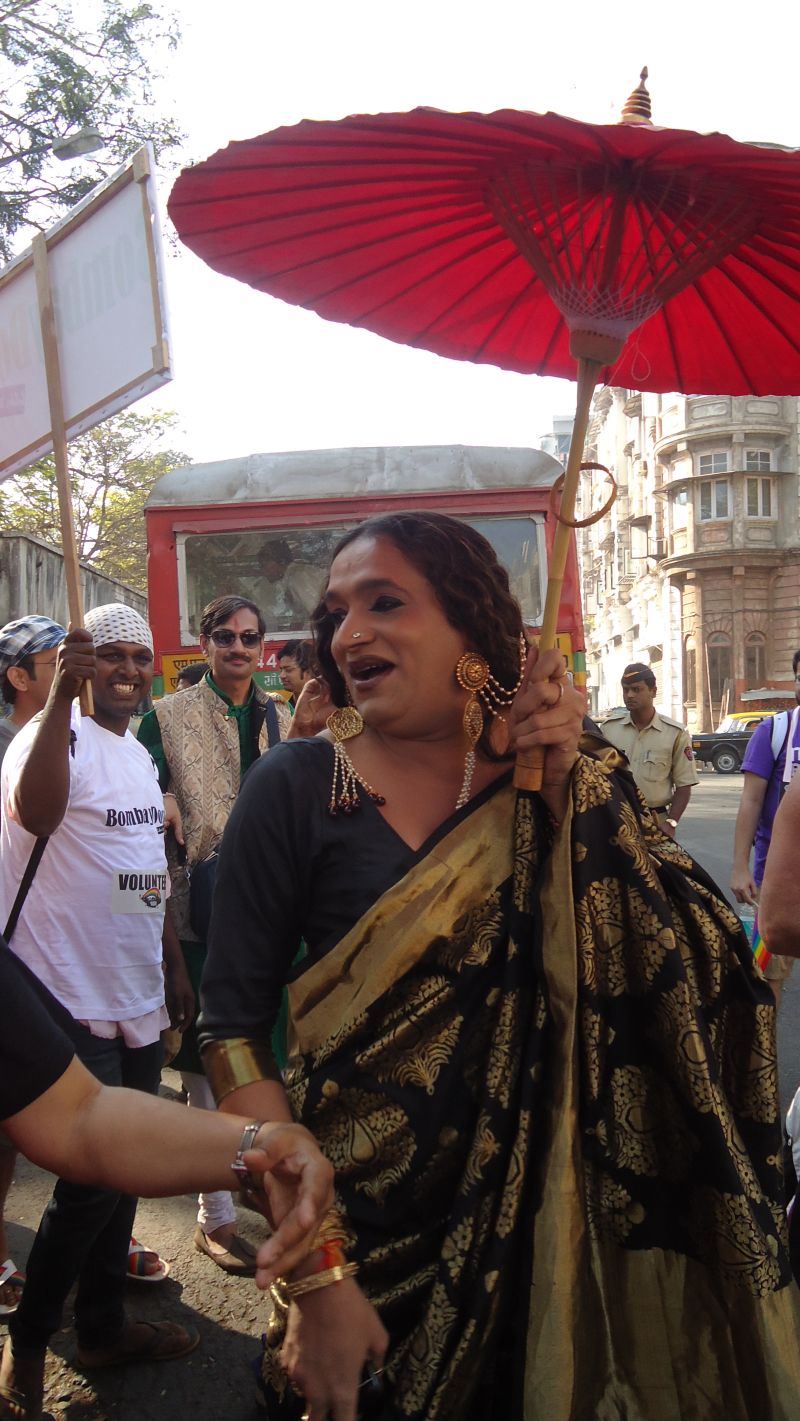
Laxmi Narayan Tripathi

I had once asked an officer at the Humsafar Trust about why there were so many people dressed very traditionally and he said that it is done intentionally so that Mumbai pride parade doesn’t become completely western and it is always easier to get acceptance if local culture in involved in it. And since India has the oldest gay culture in the whole world, it is always nice to mix the gay events with traditions and culture. I loved this idea. Anyways, the parade was full of joy, happiness and freedom. I saw less people wearing masks this year which clearly means that the LGBT community in Mumbai is becoming open and is fighting for their rights. Laxmi Narayan Tripathi, a famous Hijra social activist, also joined the parade. She is just awesome. I have already met her several times, interviewed her and I like her a lot. I think she is the most famous Hijra in the whole world.

God loves everyone

I was noticing a person for a while but did not know who he was. He was dressed like a king and I had seen him in 2009 parade also. I asked a friend and he said that he belonged to a royal family from Gujrat and was an open gay. His name was Manvendra Singh Gohil. After he revealed his homosexuality, there was some tension in the royal family and he finally started working with LGBT community in India. He started his work first with the LGBT community in Gujrat. He has in fact announced that he would adopt a child. It was nice to see big names coming out in the society and accepting their sexuality and demanding for equal rights. It was especially nice of Mr. Gohil because he comes from a royal family in India and royal families are very important for the society. If they make any changes then the society accepts it easily the same way change in the caste system along with a lot of other changes were accepted without any question.

support

I also noticed more family support this year. I saw a few people with writings like I am proud of my gay son or grand son. I saw a writing saying proud of my gay brother. I am sure that the people who are proud of their gay family members are not even one percent in number but I see the change, more and more people are accepting LGBT community. The parade finally ended at the Girgaum Chowpaty with a few speeches from social activists demanding for equal rights for LGBT community. India has already legalized gay sex practices and now they are demanding for legalizing gay marriages and equal rights. I am not sure if the situation is going to change soon. Doesn’t matter whether government allows gay marriages or not or whether they promise equal rights or not but society is not going to change soon. I have not personally seen any change in the ideas for LGBT community amongst the people of India.

great

But the good thing is that at least people have started talking about it. I see more open gay couples in the society which is a clear indication of change. But I think LGBT community is also a little bit responsible for discrimination amongst them. Sometimes they do strange things like I saw a couple of people opening their pants and showing their genitalia to the people. They were kissing each other on the main road which is not seen in India. I am not against the idea of kissing each other but I believe that if such thing is not practiced in India openly on the road then they should also not do this.

society

They won’t become part of the mainstream society until they start acting like mainstream. I believe that human feeling is same doesn’t matter whether they are gay or straight but there are some social rules and everyone should follow it. Anyways, it was good to attend the parade learn more about the community. I plan to attend the parade next year as well with a better camera. I could not make videos or interview people this year but next year I will definitely come up with more digital records of the event.

Happy Ending of the Parade

Please click here for more pictures of the pride parade-

Delhi Gay Pride 2010

Delhi pride

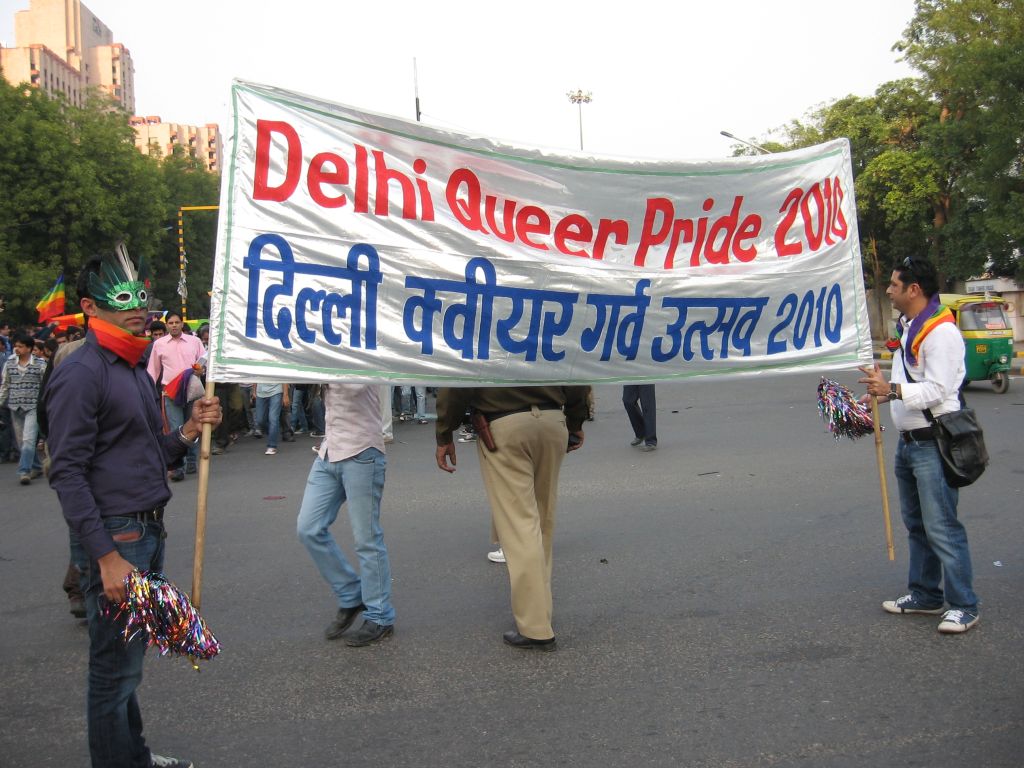
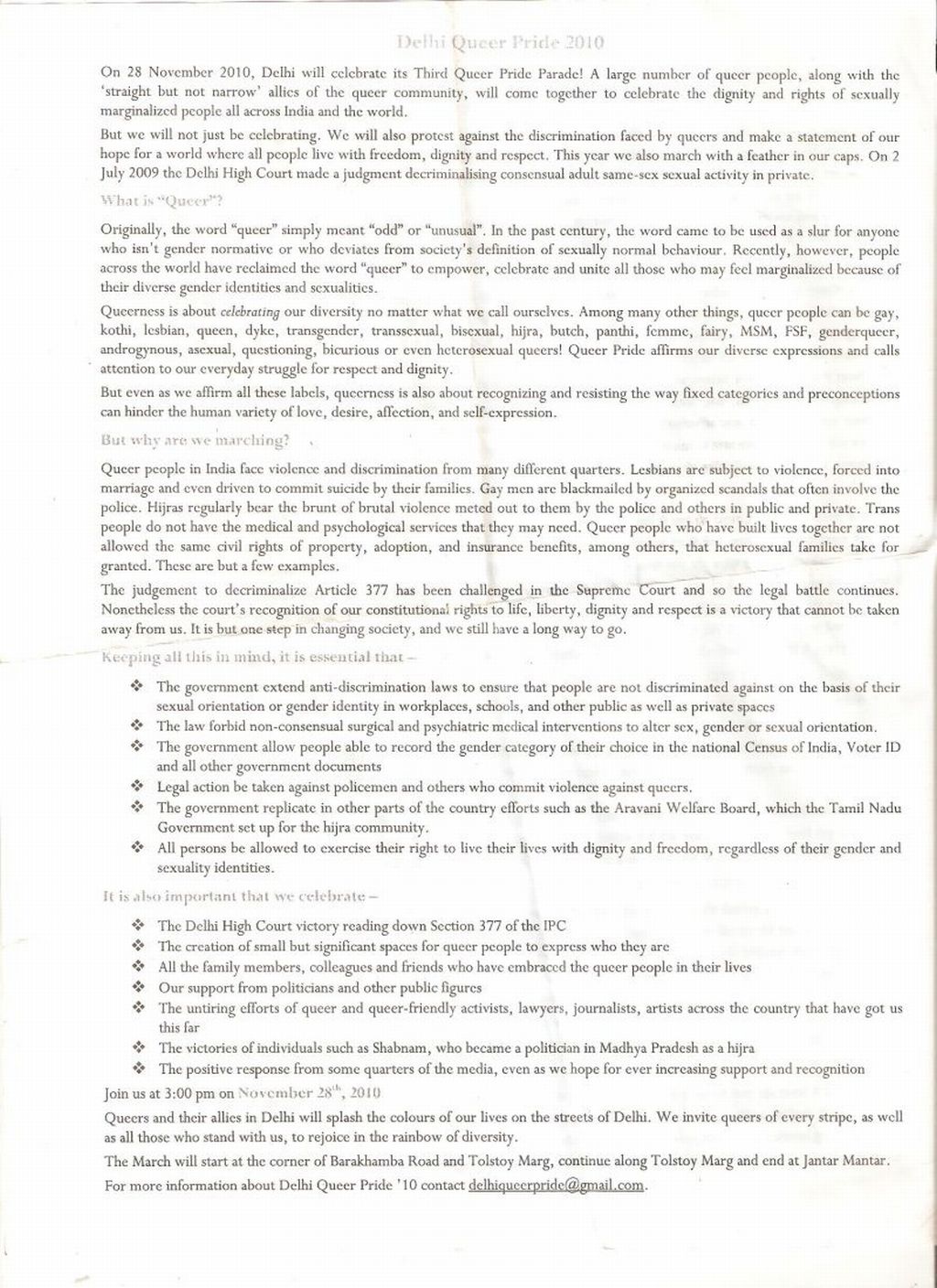
Delhi celebrated its Gay pride parade this year on 28th of November and I again went to attend it. They used to organize it in the month of June until last year but this year the date was changed because Delhi gets horribly hot during the month of June. I also feel that it was a nice decision. This year was important for me as it was Delhi’s first biggest gay event after decriminalization of section 377and I wanted to see the reaction of people. This year I went to the parade with my friend Babu. Later Ravikant also joined me who was me in Delhi for some personal business.

participants

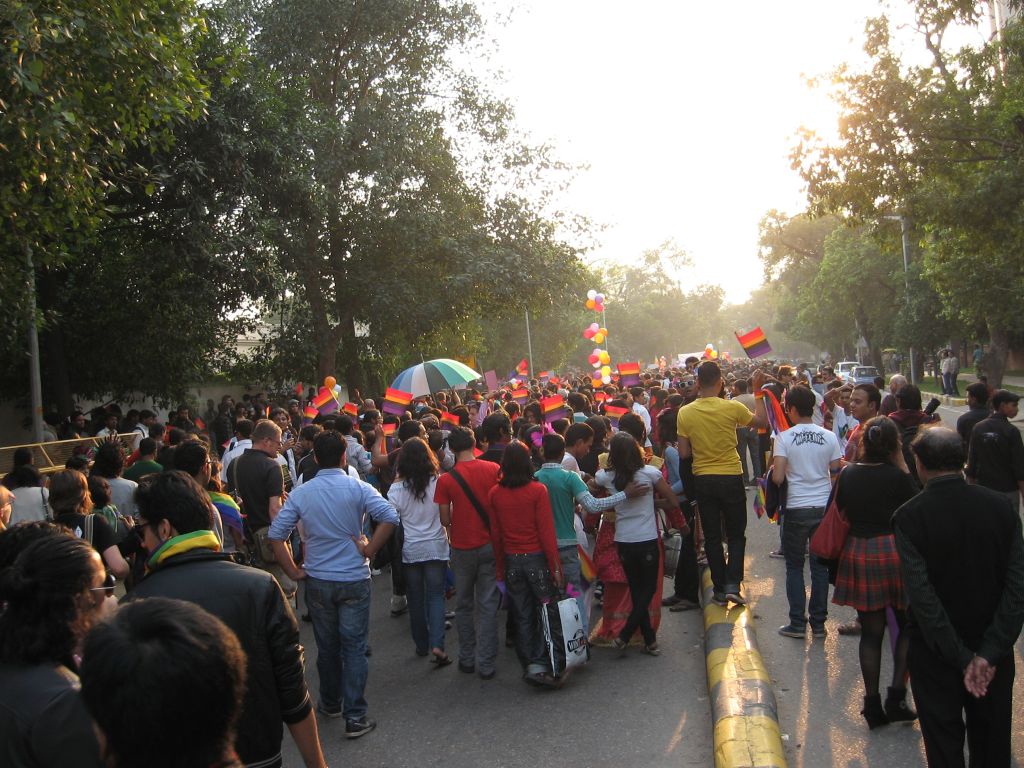
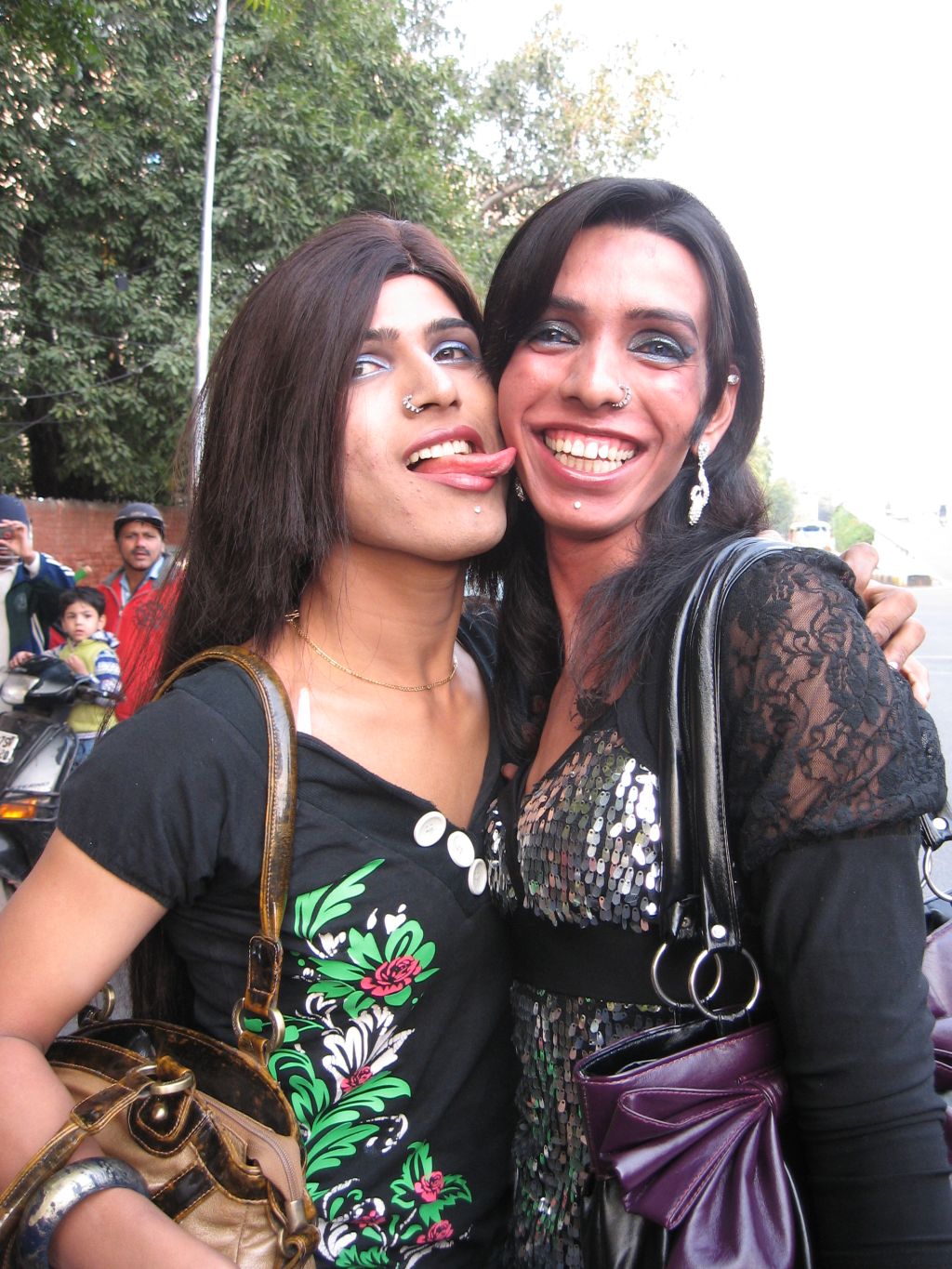
I had already been to so many gay parades taking place in India hence nothing was surprising for me but Babu and Ravi were just shocked. They had no idea of what was going on. Anyways, the parade started from Barakhambha road and ended at Jantar Mantar which was around 2 hours of walk. When I arrived at Barakhambha, there were already a few hundred people. A lot of them were dressing up, a few people were distributing masks, pamphlets and candies. I have noticed one thing that Delhi pride has always a good number of Hijras.

demands

The parade seemed way bigger than the last year and it was more diverse as well. There were all kinds of people- families, Hijras, LGBT community people, students, straights… The parade started with dancing, music, slogans… and very soon hundreds of more people joined in. The paraded was guarded with hundreds of police who would sometimes stop the traffic as well so that the parade could pass easily.  The parade lasted for about three hours and it was just like any other gay pride parade in India which was a blender of modernity and tradition. A few groups were dressed traditionally and a few people looked very very modern. The parade had a huge support of students. There were a lot of young people in the parade.

love

The parade finally arrived at its destination- Jantar Mantar where they had a few speeches of social workers, organizers and participants. A huge organization called NAPM also joined the parade this year and they announced that they are also with the LGBT community in India and would fight for them. NAPM is a huge organization working of several different issues all over India and if they also support LGBT community activity then I am sure it could bring a huge change in the society. I have been working with one of the state conveyors of NAPM in UP named Nandlal Master for a long time so it was good to see that NAPM also got involved. It was a good news because I have already been planning to organize a gay pride parade in Varanasi and if NAPM supports it then it could be a big help for me.

support

All the speeches happened and people talked about different issues but mostly people talked about how they are discriminated in the society. A few people came on the state with masks over their face but after arriving on the stage, they took off their mask and said that they were feeling so confident after attending the parade and now did not want to hide their identity and sexuality anymore. Finally they had a candle lighting program which ended the parade for this year. I was told that there would a party after the parade and I was so excited for it. I had already attended a few post parade parties and I really loved them. Somebody told me that since the number of participants increased in the parade, they have organized parties at several different places. Some of them were paid and some were free.

definitely

I asked about it to a few people and they gave me several different addresses which means this year the parade was bigger and they needed more than one place to host the party. I went back home, got ready and left again for the party. I went to a club near to Qutubminar. But after arriving there we realized that only those people were allowed who had some kind of SMS on their mobile sent by the organizing committee. I told the security guard that I came all the way from Varanasi and I had already talked with the organizers and I was actually invited to attend the party but still they were not allowing me. The system was completely different last time when I attend the parade. Last year anyone was allowed to attend the party and there was no restriction at all.

family

It was very disturbing and frustrating. Finally I met one of the organizers on the street near the club and I asked him to me. He called someone who was inside the club to pick me up. This guy showed up at the entrance and brought me in. The club was fantastic and they had a party on the rooftop with music, drinks and food. Everything was super expensive. They were serving a small bottle of beer for Rs. 600 which is usually available in the market for Rs. 50. One small shot of cheapest whiskey they had costed Rs. 600. Anyways, I bought a few drinks and was basically enjoying the party. My friends also enjoyed the party a lot. I could easily see how shocked they were but at the same time it was a interesting time for them, especially for Ravikant.

participants

Suddenly police showed up and asked the DJ to stop the music. Actually its not allowed to play loud music after 10 PM at public places anywhere in India. The organizers tried to settle the police but these guys did not want to hear anything. Finally party was stopped and we were asked to move out of the club immediately. I was kind of disappointed because post pride parties are different than regular parties, are so much fun and I enjoy them a lot but this time I could not.  But I do not regret at all, I was happy that at least I got to attend the parade. It was a nice experience and I got to learn a lot. Hope to attend Delhi pride again next year.

Please click here for more pictures of the pride parade-

Commonwealth Games 2010, New Delhi

India was so excited about Commonwealth Games in New Delhi and we were preparing for it for years. The Indian government was saying so many things like a lot of money would come, tourism will increase, we will get international identity… which is in fact true if we would have organized it well but because of the corruption everything turned out to be just opposite of what the government was promising. We lost billions of rupees, less tourism this year and very had reputation all over the world.

I was always suspicious if were prepared to host this huge event and I always had this idea that it was going to be bad for us and same thing happened. The bridge which was being built for the visitors collapsed only a few days before the event, how is this possible? and then Chief Minister of Delhi Sheela Dixit says that fortunately there no foreigners when the bridge collapsed.  What the hell is this. We were told by the government of India that the total budget of the games would be close to Rs. 16.2 billion ($365 million) but the final costing was Rs. 300 billion ($2.6 billion). How this huge difference is possible?

The games were full of corruption and I am sure that all the government officers and people involved in the games ate all of that money. They were holding the tickets hoping for foreign visitors to come and buy them but finally they had to give free tickets to the school kids so that they could show that stadiums were full. Games village was also a great example of the corruption involved in the games. They had built several flats for the players and we were always getting news that the roof was leaking, the bed was broken, the toilets were super dirty, animals were here and there, cobra snakes were also found… I don’t know what to say about this.

When I was doing my tour guide training last year in Gwalior, we were told several times by professors and tourism ministry officers that a lot of tourists would come to see commonwealth games in India and this was the only reason why our training was organized and we needed to ready to work hard but in reality not even regular number of tourists came. I think it happened only because of all the news people were getting all over the world. And of course the news said nothing nice about India and commonwealth games.

An Australian journalist was able to walk with a bomb inside the games village and nobody check him. What kind of security arrangement was this? Anyways, the government must have realized how happy people were by their corruption by the hooting on Kalmadi during the inauguration ceremony. I hope that government learnt something and would not even think about hosting any other event like commonwealth games in near future but the biggest question is that does government ever learn?

Ayodhya court decision

Ayodhya, Ayodhya, Ayodhya…I think the most popular word nowadays in India. Everybody was talking about what was going to be the decision of High court about Babri Mosque demolition. Actually this mosque was destroyed by radical Hindus on 6th of December, 1992 and since then the legal case was pending at the High court of UP. Everybody was so excited and scared also. People were so scared of the possibility of riots after the decision. We had army everywhere in the Varanasi where usually our streets are police free, we had helicopters in our sky… it was scary.

Finally the decision came and the court tried to make both Hindus and Muslims happy but Muslims do not seem to be happy with the decision. They immediately decided to go to the supreme court of India to challenge High court’s decision. Actually everybody knew that the case will be challenged in Supreme court for sure but it was strange to see how these political leaders became angry on the decision who were talking about respecting the decision of the High court. All of the leaders were appealing us to respect upcoming decision but they were the first one who seemed upset with the decision.

I was talking with a Muslim guy about what he thought about the decision and he said that all of the Muslims were very sad and disappointed with the decision. He said that they feel like High court treated them like beggars and gave only a small part of the land but honestly they have the rights over the whole premises. I did not like his view because the whole world knows that there used to be a Ram temple which was destroyed by Babur so Muslims should also think about it and be happy with the land they got for the sake of India.

In reality, if we look at the mosque through real Islamic rules, the Babri mosque should not be considered as a mosque because Islam says that any mosque built by destroying sacred places of other religions is not a mosque which clearly means that Babri mosque was not a mosque. And after all Muslims should think that the disputed premises was birthplace of Lord Rama which makes that premises a really sacred place for Hindus, maybe the most sacred place in whole India. And Babri mosque was not an important or sacred place for Muslims so why they are unhappy?

I am sure that Hindus would not compromise with this place and Muslims should also think about it. Anyways, the good thing that happened was that no riots and any tension happened because of the decision. I know it very well that many people are angry but by God grace nothing serious happened. In the year 1992 hundreds of people died. And not only in 1992 but in coming years also around 6th of Dec. I think that the young generation is educated and we do not want to fight for a piece of land. I believe that God is the same whether Allah, Ram, Jesus or anyone so why to fight?

I asked several people the same question that what should we built: a mosque or a temple and different people had different ideas and after hearing all of them I thought why not built a pub instead of a temple or a mosque. If the temples and mosque create tension then just built a pub and I am sure it will help people becoming friends with each other. Imagine Hindus and Muslims both coming under the same roof and drinking together and talking… what else we need. Communication gap is the biggest reason behind any kind of tension and this pub will finish the gap.

And this idea is already approved by a very famous and respected poet named Harivansha Rai Bacchan who talks about how temples and mosques make people fight and how drinking places bring people together in one of his most famous poets called Madhushala :

मुसलमान औ’ हिन्दू है दो, एक, मगर, उनका प्याला,
एक, मगर, उनका मदिरालय, एक, मगर, उनकी हाला,
दोनों रहते एक न जब तक मस्जिद मन्दिर में जाते,
बैर बढ़ाते मस्जिद मन्दिर मेल कराती मधुशाला!।५०।

धर्मग्रन्थ सब जला चुकी है, जिसके अंतर की ज्वाला,
मंदिर, मसजिद, गिरिजे, सब को तोड़ चुका जो मतवाला,
पंडित, मोमिन, पादिरयों के फंदों को जो काट चुका,
कर सकती है आज उसी का स्वागत मेरी मधुशाला।।१७।

सजें न मस्जिद और नमाज़ी कहता है अल्लाताला,
सजधजकर, पर, साकी आता, बन ठनकर, पीनेवाला,
शेख, कहाँ तुलना हो सकती मस्जिद की मदिरालय से
चिर विधवा है मस्जिद तेरी, सदा सुहागिन मधुशाला।।४८।

Lets forget about such issues and make the earth a beautiful and a happy place. Peace!


Poem about Indian Court system

All of the Indians always talk about our lazy and corrupt court system and I am also one of them and definitely hate getting involved with any kind of court activity. In fact India has most number of legal cases pending in the whole world which is over 30 million and the average time to clear one case in an Indian court is about 15 years.

Anyways, my friend Ravi who recently completed his law degree and is now a registered lawyer sent me a poetry about Indian courts. This whole poem talks about what happens in our court and says that do anything, just anything but never go to the court. I also think it is true. This poem was written by Mr. Kailash Gautam from Allahabad. My friend Ravi, who is a lawyer by profession, also believes in this poem:).

भले डांट घर में तू बीबी की खाना, भले जैसे -तैसे गिरस्ती चलाना
भले जा के जंगल में धूनी रमाना,मगर मेरे बेटे कचहरी न जाना
कचहरी न जाना- कचहरी न जाना.
कचहरी हमारी तुम्हारी नहीं है,कहीं से कोई रिश्तेदारी नहीं है
अहलमद से भी कोरी यारी नहीं है, तिवारी था पहले तिवारी नहीं है
कचहरी की महिमा निराली है बेटे, कचहरी वकीलों की थाली है बेटे
पुलिस के लिए छोटी साली है बेटे, यहाँ पैरवी अब दलाली है बेटे
कचहरी ही गुंडों की खेती है बेटे, यही जिन्दगी उनको देती है बेटे
खुले आम कातिल यहाँ घूमते हैं, सिपाही दरोगा चरण चुमतें है
कचहरी में सच की बड़ी दुर्दशा है, भला आदमी किस तरह से फंसा है
यहाँ झूठ की ही कमाई है बेटे, यहाँ झूठ का रेट हाई है बेटे
कचहरी का मारा कचहरी में भागे, कचहरी में सोये कचहरी में जागे
मर जी रहा है गवाही में ऐसे, है तांबे का हंडा सुराही में जैसे
लगाते-बुझाते सिखाते मिलेंगे, हथेली पे सरसों उगाते मिलेंगे
कचहरी तो बेवा का तन देखती है, कहाँ से खुलेगा बटन देखती है
कचहरी शरीफों की खातिर नहीं है, उसी की कसम लो जो हाज़िर नहीं है
है बासी मुहं घर से बुलाती कचहरी, बुलाकर के दिन भर रुलाती कचहरी
मुकदमें की फाइल दबाती कचहरी, हमेशा नया गुल खिलाती कचहरी
कचहरी का पानी जहर से भरा है, कचहरी के नल पर मुवक्किल मरा है
मुकदमा बहुत पैसा खाता है बेटे, मेरे जैसा कैसे निभाता है बेटे
दलालों नें घेरा सुझाया -बुझाया, वकीलों नें हाकिम से सटकर दिखाया
धनुष हो गया हूँ मैं टूटा नहीं हूँ, मैं मुट्ठी हूँ केवल अंगूंठा नहीं हूँ
नहीं कर सका मैं मुकदमें का सौदा, जहाँ था करौदा वहीं है करौदा
कचहरी का पानी कचहरी का दाना, तुम्हे लग न जाये तू बचना बचाना
भले और कोई मुसीबत बुलाना, कचहरी की नौबत कभी घर न लाना
कभी भूल कर भी न आँखें उठाना, न आँखें उठाना न गर्दन फसाना
जहाँ पांडवों को नरक है कचहरी, वहीं कौरवों को सरग है कचहरी ||


Trip to Nepal for Kathmandu Gay Pride 2010

beautiful nature

beautiful nature

I traveled to Nepal with my friend Babu to attend Kathmandu gay pride and it was a really unforgettable experience. I took a bus from Varanasi to Sonauli. There are several buses from Varanasi bus station and we took the last one at 8.30 pm. It was an overnight journey from Varanasi to Sonauli and the bus ride was really uncomfortable. The road was terribly bad and I just could not sleep for the whole night. Finally we arrived Sonauli border at 7 am and took a paddle rickshaw to cross the border. I was carrying a few electronics like video camera, photo camera and voice recorder etc.  and wanted to declare them at the Indian custom office.

Babu

Babu at Pashupati nath temple

When I told Babu to about declaring the electronics at Indian custom office, he laughed at me and said that there was no need to do such thing but I had already experienced the problem before when I went to Nepal first time in 1996. Actually I was traveling to Nepal with my family those days. We had a camera and we informed the custom office at Sonauli border about this camera and got a receipt but we lost it somewhere in Nepal and returning time they checked our baggage and found that camera and said that it was not allowed to bring any electronics from Nepal to India.

very colorful country

very colorful country

We were shocked and we told them that it was our camera which we had brought from India and we had a receipt but we lost it but those crazy custom officers said that it was not allowed. Actually they wanted a bribe so finally we gave them some money and only then we could move. I still had that story in my mind hence I did not want to take any risk. So I went to the custom office at Sounali border and told them that I had a few electronic goods and I wanted to declare them but as I told this, all those officers laughed and said: you are very smart.

carving on Nepali houses

carving on Nepali houses

Anyways, I declared my stuffs and got a receipt for it but they again asked for a bribe only for giving me this receipt. I was like why bribe now? He said that this is system and I have to give them some money otherwise they would not give me my receipt. I gave him Rs. 20 but he said that he wanted at least Rs. 50. Finally I gave him Rs. 40 and took my receipt. I wast thinking that I declared my electronics in advance to avoid any kind of problem and corruption but there was actually no way to avoid it. After taking the receipt, we crossed the border and arrived Nepal.

carvings on temples

carvings on temples

Although Nepal also used to be a Hindu country only until a few years a go and I was hoping for Nepal culture to be close to Indian culture but Nepal was different starting from right at the border. Different looking people, different clothing, more working woman, different vehicles… there was a huge difference between India and Nepal. I really felt like being in another country. But there was something very similar to India- touts fucking tourists all the time. It was really overwhelming. Several people approached us right at the border to sell bus tickets to Kathmandu. They all wanted to sell bus tickets to Kathmandu and hotel rooms.

forest

forest

Babu said that they were all touts and tell  lies all the time. All of the touts were saying there was a bus going to leave within one hour but Babu said that these buses never leave before 4 pm. I did not believe Babu but my rickshaw driver also told me the same thing. Actually there are direct buses from Sonauli border to Kathmandu but only in early morning and late afternoon time like around 6-7 am or 4-5 pm. I was lucky that Babu was with me and I did not go with them. We took a bus from Sonauli border to a place called Bhairava which was hardly 30 minutes bus ride.

green and wet

green and wet

Bhairava is the biggest bus station near Sonauli border and they have regular buses to Kathmandu. We arrived there by 9 o’clock and came to know that there was a bus a 9.30. I realized something really strange that Nepal has no government bus service; all the buses are private hence there is no fix fare or anything. I did not know that I was supposed to bargain even for bus fare but Babu managed it. There was a counter at the bus station and they asked us for Rs. 450 NR but ended up paying Rs. 350 NR.

pashupati nath temple

pashupati nath temple

The bus started at 9.30 but was stopped again right after 15 minutes by The army. I thought that he would check everyone but he just came in, looked around and started checking the bags of a few people. The strange thing about this check up was that they were not looking for arms only but they were looking for potatoes and sugar also. I started laughing when Babu told me that he was looking for potatoes and sugar but it was true. Actually the rate of sugar and potatoes and and other vegetables are different between India and Nepal hence they do not want people to smuggle cheap stuffs from India and sell them in Nepal. It was interesting.

family voilence

family voilence

Nepali buses were really crap. They were too small and had no space for my legs. It was raining continuously all the way from Sonauli border until Kathmandu and believe me the water was coming through the window even after closing it. I was wet all the time continuously for more than 12 hours in the bus. The nature was just awesome; clean river, fresh air, greenery… I noticed something really different in Nepal. I saw that there were more working women in Nepal than India. I notice that most of the shops were run by women and Nepali women seemed to be in better condition than Indian women.

Nepali girl

Nepali girl

Nepal seemed to be more progressive in terms of women rights when compered with India. The women were traveling alone, going to office, running shops, women auto rickshaw drivers and the women seemed more friendly with men… it looked really cool to me. I was happy to see it. I saw so many alcohol shops run by alone women. I had never ever seen anything like that anywhere in whole India. Once I saw an alcohol shop with a woman owner and I decided to talk with her. I went there and started asking about alcohol first and when we became friendly I asked her about her life.

liberal Nepali girl

liberal Nepali girl

I asked her if she feels safe sitting alone at alcohol shops and dealing with male customers who are drunk sometimes and she told me that she managing the business is just like any other male member of her family managing the business; no difference so problem to her. I asked her if people in the society mind women working at the alcohol shops and again she said that Nepali society is very progressive when it comes to equal rights for women. I asked her if she had ever been to India and she said that she had never been to India before but had seen India on TV. In reality she did not seem excited about visiting India.

the most beautiful alcohol bottle I had ever seen

the most beautiful alcohol bottle I had ever seen

I told her that it is just not possible to see any women selling alcohol in India and that there are less percentage of working women in India and she said that she was very well aware of the situation of women in India. She said that there are so many Indian families living in Nepal and they also do not allow their women to go out and work. I asked her what Nepali people think of this situation and she said that to be honest, we think that Indians are crazy and backward people. I was surprised to hear this but in reality yes, we are much backward than Nepal in terms of women rights and equal rights for women.

the most luxry way to travel in Nepal

the most luxry way to travel in Nepal

The nature was just awesome all over Nepal. One could easily see that their nature is still untouched. Beautiful thick jungle, beautiful rivers, less industries, less people, less traffic and lots of mountains… it was just awesome. I really enjoyed nature a lot in Nepal. I also noticed that I saw only five big factories in my whole bus ride all the way from Sonauli till Kathmandu. In fact, two of them were Indian factories which sounds nice because there is less pollution because of less factories but there is another truth that there are less jobs because of less industries which means more poverty.

beautiful windows

beautiful windows

Poverty in Nepal really hurt me. There were so many family houses right along the Sonauli-Kathmandu highways so I got to see so many people doing things. But the really interesting thing for me was that nobody was doing anything, just sitting or talking with people, that’s all. It seemed like they just don’t have any work. I had never seen that many young people just sitting here and there and passing time. There were so many kids selling water bottles and snacks on the road. Nepal has been suffering a lot from its political instability for the past few years which seems to be the biggest reason of poverty of Nepal. I dont know, maybe some other reason but Nepalis were just not happy at all from their political system.

cremation at Pashupatinath temple

cremation at Pashupatinath temple

Finally we arrived Kathmandu by 8 PM and it was still raining. I had read about a neighborhood called Thamel which was full of hotel. I wanted to stay there. I asked Babu to ask some locals about where was this neighborhood and he told me that Nepali people are crazy and never tell you the right direction. He suggested me to go to any shop run by any Indian and ask them about the direction of Thamel. We went to a paan shop, bought a few things and asked him the direction to Thamel and fortunately he was a nice guy who told us the right direction to Thamel. It took us about 10 minutes of walk and we had to ask a few other people also the direction to Thamel but we arrived there.

life and death at same place

life and death at same place

We arrived Thamel which was full of hotels, in fact it was the most popular neighborhood in Nepal for backpackers. We went to several hotels but their price seemed too steep to us. Babu was telling me that we could easily find a hotel room worth 500 NR but none of them wanted to charge us less than 1000 NR. Finally we reached a hotel Annpurna hotel. They wanted to charge us 800 NR per night. I told him that I was a government approved tour guide in India and all the hotels give me discount in India then he agreed to give me a room for 500 NR.

Nepali food that I didn't like at all

Nepali food that I didn't like at all

The hotel seemed nice at first but later we realized that pillow covers and bed sheets were used, cable connection was not working properly, telephone was there but dead. We complained about it and were promised to get everything on work by next morning but in fact this next morning never came before we left. In any case, I was not there to enjoy luxury, watch TV or make phone calls from my room hence I also did not mind it. We went out to take our dinner at some restaurant but most of the shops were closed by 8.30 PM. We found a restaurant opened and had our dinner there.

Nepali highways

Nepali highways

I had read several articles about nightlife in Nepal including dance bars and massage centers. A lot of the articles said that Nepal nightlife was safe but most of them said that it was really crazy and dangerous. I had several articles talking about how people went to a night club, spent a few hours, had a few beers and dinner and paid Rs. 40-50,000 and were misbehaved. Several articles talked about how 14-15 years old kids are involved in sex industry and work as pimps. I was curious about what was going on and we had decided to visit at least one night club while being in Kathmandu.

I was just walking here and there in Thamel and saw so many massage parlors. Once we were just passing by a shop which had a sign board saying massage parlor and I was showing this to Babu. Suddenly a hardly 15 years old guy came to me and asked what I was looking at. I told him that I was just watching the advertisements and he said that no, I was looking for something else, something special. I was like no I was just looking here and there. He again asked me if I needed some special service and I told him that I did not need any special service.

We walked away from there but this guy was keep following us and was asking if we needed a girl. He offered us young beautiful girls for really cheap price. He was not alone, there were so many pimps here and there watching tourists. Anyways, I was able to get back to my hotel safely. The next day we worked for a while, walked around, did some shopping… and it was a nice experience. I really missed veg Indian food as it was meat everywhere. But I liked something that they had drinks very easily available so I was enjoying all different kinds of alcohol.

I wanted to use an ATM in Kathmandu but was concerned about paying international transaction fee but Babu told me that a few Indian banks also have their own ATMs in Kathmandu like State Bank of India and Punjab National Bank. There was one State Bank of India ATM near Darbar Square. I used this bank and did not pay any transaction fee. So I would suggest anyone holding Indian bank card should just look for Indian bank ATMs in Kathmandu. Telephones were also so cheap in Nepal. I paid only Rs. 1 per minute for a phone call to India.

Since we were so interested in visiting a night club in Kathmandu. we were gathering information about it through online sources. But fortunately I met a guy at the NGO, where I was supposed to work, who was a male prostitute. I thought who could provide better information than him about night life in Kathmandu. I asked him about it and he suggested me not to visit any night clubs in Kathmandu as they are not safe at all, especially for tourists. He also told me the same thing what I had read online so finally we decided that we would not visit any night club in Kathmandu.

We visited a few temples, markets and participated in Kathmandu Gay Pride. Finally my time was over in Kathmandu and now we needed to head back to home. Babu told me that they had overnight buses from Kathmandu to Sonauli until 10 PM. We arrived at the bus station around 8 PM but all the buses were already gone by then. They said that the last bus was at 7 PM. So we took our dinner, stayed at a hotel near bus station and took an early morning bus to Sounauli and then another bus from Sonauli to Varanasi. It was a successful journey full of learning. I really plan to go back again to Kathmandu sometime for longer period of time.

Please click here to see more pictures: